The Woman Who Spoke Five Languages and Came Home to Teach One: How a Wartime Interpreter Changed Appalachia
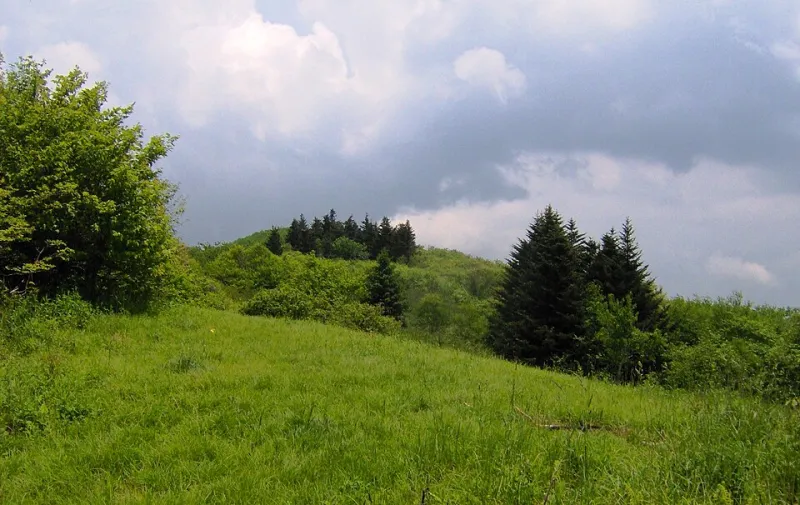
Photo: Brian Stansberry, CC BY 3.0, via Wikimedia Commons
Vera Colton could translate a German communiqué into serviceable French before most people had finished their morning coffee. By the time she was twenty-six, she had sat in rooms where the outcome of the war was being quietly decided, turning words from one language into another with the precision of a surgeon and the speed of a telegraph operator.
 Photo: Vera Colton, via verasposhpaws.com
She came home from the war in 1946 to a small hollow in eastern Kentucky, and nobody knew what to do with her.
The Education Nobody Planned For
Vera grew up in Harlan County, the daughter of a coal miner who believed, with a ferocity unusual for the time and place, that his children should be educated. He drove Vera forty minutes each way to a school that offered something beyond the basics. When a teacher noticed her aptitude for language — she'd picked up some Italian from a neighboring family and could mimic accents with unnerving accuracy — arrangements were made, slowly and with considerable effort, for her to continue studying.
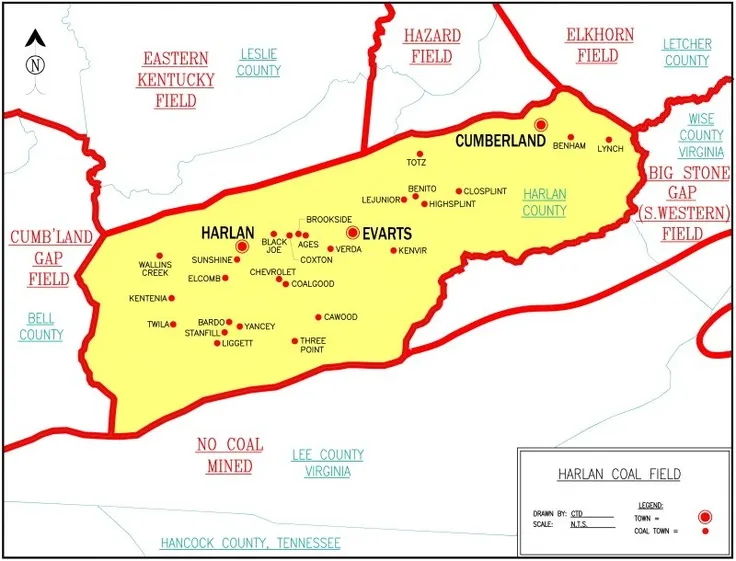 Photo: Harlan County, via i.pinimg.com
By the time she graduated high school, she was reading German and French. By the time she finished two years at a regional college, she had added enough Italian and Spanish to be considered genuinely multilingual. She was also, in 1942, exactly the kind of person the United States military was quietly desperate to find.
The Army recruited her through a program that was never publicly named and was only partially declassified decades later. She was sent to Washington for additional training, then overseas. For three years, she worked as a military interpreter — in North Africa, in the European theater, and briefly in the Pacific. She sat in on briefings. She translated documents. She was present, at the edges of rooms, during conversations that shaped the war's trajectory.
"She used to say she was furniture," her daughter recalled in a 1998 interview with a regional newspaper. "She said the generals looked through her like she wasn't there. But she heard everything."
The Door That Wasn't There
When Vera came home in the spring of 1946, she carried with her a set of skills that were, objectively, extraordinary. She spoke five languages with professional fluency. She had worked under pressure in high-stakes environments. She had demonstrated the kind of discretion and cultural intelligence that any number of organizations should have been scrambling to employ.
Instead, she spent eight months unable to find work that used any of it.
The federal agencies that had needed her during wartime had little use for her afterward — or at least, little use for a woman in the roles she was qualified to fill. Private companies weren't much better. She applied to diplomatic and translation positions, was told repeatedly that the roles were being filled by returning male veterans, and eventually stopped applying.
"What she told me," her daughter said, "was that she came home feeling like she'd dreamed the whole thing. Like those years hadn't counted."
For a while, it seemed like they might not.
What She Did Instead
The pivot, when it came, wasn't dramatic. It wasn't even a decision, exactly — more like a slow recognition of what was in front of her.
Vera had come home to a community where adult illiteracy was common and largely unaddressed. The schools were underfunded. The roads were bad. The assumption, embedded in the culture of the region, was that reading beyond a functional level was a luxury that coal country couldn't afford. People got by. Getting by was the goal.
Vera started small. A neighbor's wife who wanted to write letters to her son. A man down the road who needed to read his mining contract but wouldn't admit it. She taught them at her kitchen table, one at a time, with whatever materials she could find or make herself.
Word spread the way word spreads in small communities — sideways and quietly. By 1948, she had more students than her kitchen could hold. By 1950, she had organized what she called the Harlan Reading Circle, a community literacy program that operated out of churches, school buildings after hours, and occasionally people's living rooms.
"She treated every single person who came to her like they were intelligent," said a former student, interviewed decades later. "Because they were. They just hadn't had the chance. She understood that."
That understanding — the deep, practiced knowledge that language is a bridge, not a gatekeeping mechanism — was something Vera had built across three continents and five languages. She brought it home and applied it to the most fundamental version of the problem: a person and a page, and the gap between them.
Thirty Years of Quiet Work
The Harlan Reading Circle ran, in various forms, from 1948 until Vera's retirement in 1979. In that time, it served an estimated 2,000 adults across several counties, with ripple effects that extended to their children and grandchildren — families who had seen education modeled as something worth pursuing, taught by a woman who had pursued it to the edges of the world.
Vera never sought publicity for the program. She applied for and received modest grant funding in the 1960s, when federal literacy initiatives created new pathways for community programs, but she ran the operation with the same low-profile discipline she'd brought to wartime briefing rooms. She was there to do the work, not to be seen doing it.
In the 1970s, a researcher from the University of Kentucky studying literacy outcomes in Appalachian counties stumbled onto the data trail the Reading Circle had left behind — improved test scores, higher rates of adult education completion, a measurable shift in educational attainment that tracked, almost precisely, with the geographic reach of Vera's program.
 Photo: University of Kentucky, via img0.etsystatic.com
The researcher tried to write about it. Vera declined to be interviewed at length. "She said there wasn't a story," the researcher later recalled. "She said she just taught people to read. I kept trying to explain that she'd done something remarkable, and she kept not being interested in that framing."
The Bridge Builder
Vera Colton died in 1991. She was survived by her daughter, two grandchildren, and a community that, in many cases, didn't fully know what she had done — because she hadn't told them.
What's striking, looking back, is how perfectly her wartime training prepared her for the work she did at home. She had spent years building bridges between people who couldn't understand each other — translating not just words but intent, context, and meaning across the chasms of language and culture. She came home and did the same thing, on a smaller stage, with higher stakes for the people immediately in front of her.
The generals in those wartime briefing rooms may have looked through her like furniture. But Vera Colton was paying attention the whole time — learning what it meant to connect people across impossible distances, and storing it away for the moment she'd need it most.
That moment turned out to be a kitchen table in Harlan County, Kentucky, with a neighbor who wanted to write a letter and didn't know how.
She was ready.