Turned Away at the Door, She Walked Through a Different One — and Saved a Million Lives
Most stories about military heroes involve a battlefield moment — a split-second decision, a charge under fire, a sacrifice that history can point to and say: there, that's where it happened. Florence Blanchfield's story doesn't work that way. Her battlefield was paperwork, bureaucracy, and a military establishment that spent decades insisting women didn't really belong in the rooms where decisions got made. She won anyway. And the victories she accumulated in those rooms — quiet, unglamorous, fiercely contested — saved an almost incomprehensible number of lives.
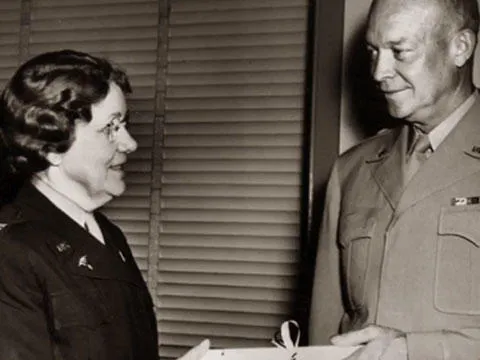 Photo: Florence Blanchfield, via images02.military.com
She was, in the truest sense, the kind of person this country has a long history of underestimating.
The Rejection That Started Everything
Blanchfield was born in 1884 in Shepherdstown, West Virginia, the daughter of an Irish immigrant father and a mother who died when Florence was still young. The family didn't have resources to spare, and the path to professional nursing — which in that era meant formal training programs at established hospitals — wasn't easy to access for a girl from a small Appalachian town with limited connections.
 Photo: Shepherdstown, West Virginia, via a.travel-assets.com
She applied to nursing programs and was turned away. The specifics of each rejection have been softened by time, but the pattern is clear: the formal infrastructure of medical training was not organized around making things easy for women like her. Rather than treating those closed doors as a verdict, Blanchfield treated them as a detour.
She found her way into nursing through less conventional channels — practical training, hands-on work, the kind of experience that doesn't come with a certificate but leaves you knowing exactly what you're doing when things go wrong. By 1906, she had earned her nursing diploma and begun building a career that would, eventually, put her at the center of one of the most significant institutional transformations in American military history.
Years in the Invisible Middle
For a long stretch, Blanchfield's career looked like the kind that history tends to overlook. She joined the Army Nurse Corps in 1917, served in the Philippines, China, and across multiple stateside postings, and accumulated a depth of administrative and clinical experience that was, by any honest measure, extraordinary. But the Army Nurse Corps existed in a strange institutional limbo: its members served, sacrificed, and in some cases died in service to the country, but they held no official military rank. They were nurses. Not officers. The distinction mattered enormously in terms of authority, pay, and the ability to actually enforce standards.
Blanchfield spent years working within that system — and working to change it. She was meticulous, persistent, and strategic in a way that didn't always make headlines but steadily moved the needle. She rose through the Corps, eventually becoming superintendent in 1943, just as the United States was fully committed to fighting a two-front war that would demand more from military medicine than any previous conflict in history.
The Fight for a Commission
The campaign to grant military nurses actual commissioned officer status had been fought for years before Blanchfield took it on directly. The resistance wasn't subtle — there were members of Congress and military leadership who believed, with genuine conviction, that formalizing women's authority in the armed forces was either unnecessary or actively dangerous to good order.
Blanchfield disagreed. And she made her disagreement known through every channel available to her: congressional testimony, internal advocacy, careful alliance-building with military leaders who understood what was actually at stake. She argued — correctly, as it turned out — that without real rank, Army nurses couldn't enforce discipline, couldn't command respect from enlisted personnel in field conditions, and couldn't do their jobs as effectively as the soldiers depending on them needed them to.
The Army-Navy Nurse Act of 1947 finally granted women in the military nurse corps full commissioned officer status. It was a watershed moment — the result of decades of advocacy by many people, but with Blanchfield's fingerprints all over the final push.
In 1947, she became the first woman ever to receive a commission as a regular officer in the United States Army. The ceremony was historic. The work that made it possible was anything but glamorous.
What the Numbers Actually Mean
It's worth stopping to understand what Blanchfield's organizational work meant in concrete terms. During World War II, the Army Nurse Corps grew from fewer than 1,000 nurses to more than 57,000. These women served in every theater of the war — North Africa, the Pacific, Europe — often under fire, often in conditions that would test anyone's limits. The survival rate of American wounded soldiers in World War II was dramatically higher than in any previous conflict, and military historians credit improved battlefield nursing as a significant factor.
That improvement didn't happen by accident. It happened because someone spent decades insisting that the people doing the work deserved the authority, the training standards, and the institutional respect to do it right.
The Thing About Persistence Inside a System That Doesn't Want You
Blanchfield's story is sometimes told as a triumph of stubbornness, and that's not wrong. But it's more precise to call it a triumph of strategic patience — the ability to stay inside a system that was actively resistant to what you were trying to accomplish, to keep pushing without burning every bridge, and to build enough credibility over enough years that the system eventually ran out of reasons to say no.
She retired in 1947, the same year she received her commission — a piece of timing that carries its own quiet irony. She'd spent her career fighting for something she would barely have time to enjoy herself. But the nurses who came after her, and the soldiers whose lives depended on those nurses, inherited everything she'd built.
Florence Blanchfield died in 1971. She is buried at Arlington National Cemetery, which feels exactly right for a woman who spent her life insisting that service deserved recognition — even when the people in charge weren't ready to give it.
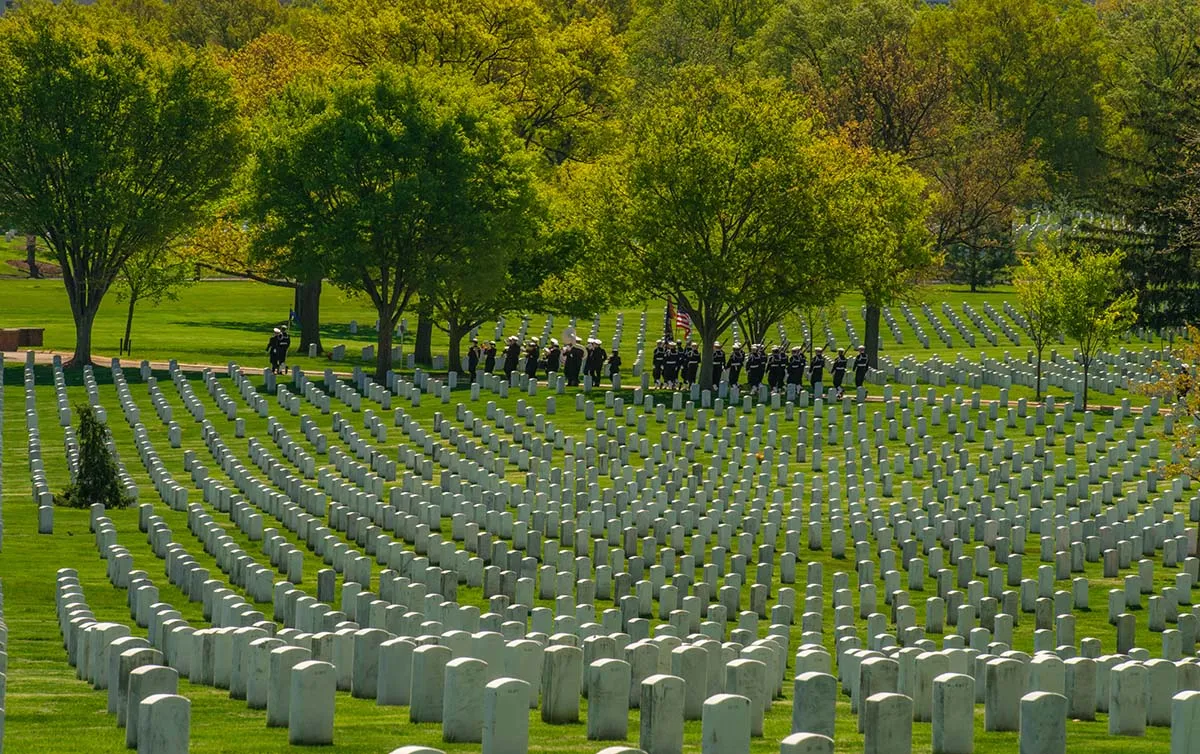 Photo: Arlington National Cemetery, via www.arlingtontours.com