Five Feet Tall and Fighting Mad: The Farm Kid Who Rewrote the Definition of War Hero
The Boy Nobody Wanted
In 1942, seventeen-year-old Audie Murphy stood barely five feet five inches tall and weighed about as much as a wet coat. He'd been picking cotton since he could walk, hunting rabbits to keep his family fed, and wearing the same pair of shoes until they fell apart on his feet. When he tried to enlist after Pearl Harbor, the Marines took one look at his scrawny frame and laughed him out of the recruitment office.
The Navy wasn't interested either. Neither were the paratroopers. Everyone agreed: this baby-faced kid from Hunt County, Texas, belonged anywhere but a battlefield.
 Photo: Hunt County, Texas, via cdn.pixabay.com
The Army finally said yes, but only because they needed bodies. Nobody expected much from the quiet farm boy who'd never been more than fifty miles from home.
When Desperation Meets Determination
Murphy's childhood had been a masterclass in survival. His father abandoned the family when Audie was sixteen, leaving him to support his mother and eleven siblings on a sharecropper's wages. When his mother died a year later, he placed his younger siblings in an orphanage because he couldn't feed them all.
That kind of responsibility ages a person fast. While other teenagers worried about homework and dates, Murphy was making life-or-death decisions about rationing food and keeping his family together. The military brass saw a skinny kid; Murphy's siblings saw someone who'd already been fighting impossible odds his entire life.
The Quiet Revolution of Company B
Murphy's first taste of combat came in Sicily, then Italy, then France. His fellow soldiers noticed something unusual: the kid who looked like he'd blow away in a strong wind never seemed rattled by gunfire. While others dove for cover, Murphy would calmly assess the situation and figure out how to solve it.
It wasn't recklessness. Murphy approached combat the same way he'd approached poverty—by refusing to accept that the situation was hopeless. When his unit was pinned down by German machine gun fire, Murphy didn't see an insurmountable enemy position. He saw a problem that needed solving.
His solution usually involved working his way behind enemy lines, alone, and taking out the threat with whatever weapon he could find. His commanding officers started noticing that impossible situations had a way of becoming possible when Murphy was around.
The Day Everything Changed
January 26, 1945, near the French village of Holtzwihr. Murphy's company was down to nineteen men, facing a German counterattack with six tanks and 250 infantry soldiers. The smart move would have been retreat.
Murphy ordered his men to fall back, then climbed onto a burning tank destroyer and used its .50-caliber machine gun to hold off the entire German advance. For an hour, he stood on that burning vehicle, calling in artillery strikes on his own position and picking off enemy soldiers one by one.
When the smoke cleared, Murphy had killed or wounded fifty German soldiers and stopped a counterattack that could have broken the entire Allied line. He did it while standing on a vehicle that could have exploded at any moment, wounded in the leg, and completely alone.
The Army didn't quite know what to do with that level of audacity.
The Medals They Kept Giving Him
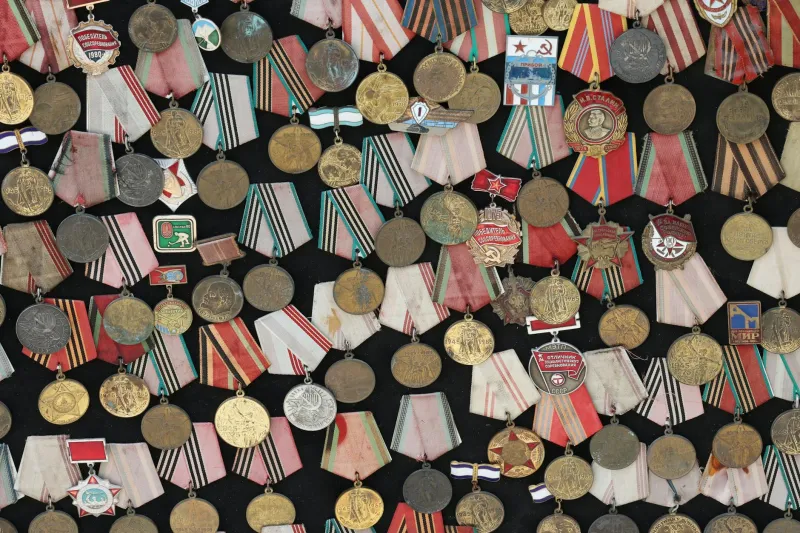
By war's end, Murphy had earned thirty-three awards and decorations, including the Medal of Honor, two Silver Stars, and three Purple Hearts. He'd been wounded three times, killed 241 enemy soldiers, and captured or destroyed numerous enemy positions.
More importantly, he'd proven that the military's assumptions about who makes a good soldier were completely wrong. Height, weight, and background meant nothing when measured against determination and the willingness to do whatever the mission required.
After the Cameras Stopped Rolling
Murphy's post-war life included a Hollywood career and struggles with what we now recognize as PTSD. He became an advocate for veterans' mental health long before it was fashionable, speaking openly about the invisible wounds that followed soldiers home.
But his real legacy isn't the movies or the medals. It's the reminder that courage doesn't look like what we expect. Sometimes it comes in a five-foot-five package from rural Texas, wearing borrowed boots and carrying more responsibility than any teenager should have to bear.
The military learned something valuable from Audie Murphy: never underestimate the quiet ones who've already survived the impossible. They might just surprise you with what they're capable of when everything's on the line.