The Woman Who Heard Everything: Inside the Secret Life of Democracy's Most Important Witness
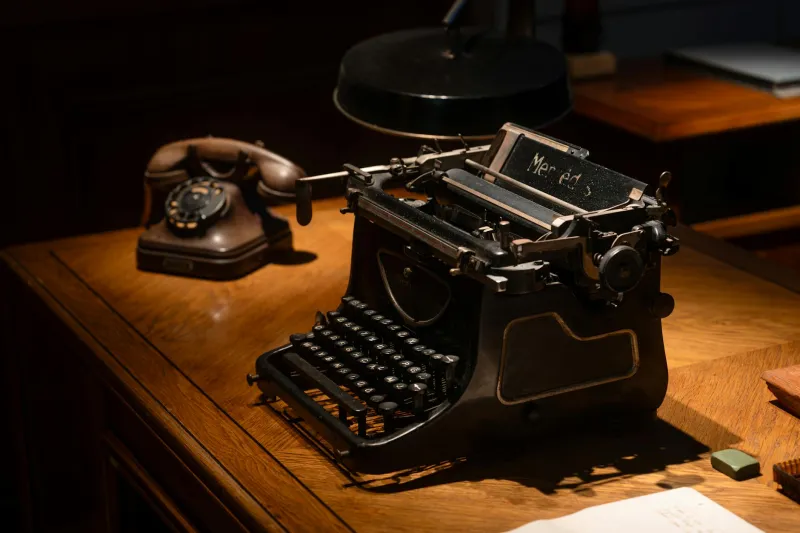
The Invisible Woman in the Corner
Every morning for four decades, Mary Sullivan arrived at the U.S. Capitol building, took her seat in the corner of the Senate chamber, and prepared to witness history. Her stenotype machine was positioned at the perfect angle to catch every whispered sidebar, every heated exchange, every moment of legislative drama that would eventually reshape American law.
 Photo: Senate chamber, via www.pngitem.com
 Photo: U.S. Capitol, via i.ytimg.com
Sullivan wasn't a senator, a lobbyist, or a journalist. She was a stenographer—one of a small army of women whose job was to become invisible while recording everything. From 1935 to 1975, she transcribed the debates that created Social Security, the Civil Rights Act, and the legislation that built modern America. Her verbatim records became the official Congressional Record, but her name appears nowhere in the history books.
This is the story of the woman who heard everything and said nothing—until now.
Learning to Disappear
Sullivan learned stenography at a business college in Washington, D.C., during the depths of the Great Depression. For young women with high school educations, stenography offered one of the few paths to steady employment and decent wages. The best stenographers could capture spoken words at 200 words per minute with perfect accuracy—a skill that required years of practice and nerves of steel.
When Sullivan was hired by the Senate in 1935, she joined a sisterhood of women who had mastered the art of professional invisibility. Congressional stenographers were expected to dress conservatively, speak only when spoken to, and maintain absolute confidentiality about everything they heard.
"We were furniture that happened to be alive," Sullivan would later recall. "The senators talked around us like we weren't there, which was exactly the point."
The Front Row Seat to History
Sullivan's stenotype machine captured some of the most pivotal moments in twentieth-century American politics. She was there in 1935 when senators debated the Social Security Act, transcribing arguments about whether the federal government had any business providing retirement benefits to American workers.
She recorded the heated exchanges during World War II when senators argued about military funding, draft legislation, and America's role in the global conflict. Her fingers flew across the keys as lawmakers debated the Marshall Plan, the creation of NATO, and the early stirrings of the Cold War.
But perhaps her most significant work came during the civil rights era of the 1950s and 1960s. Sullivan transcribed the Senate debates over the Civil Rights Act of 1964, capturing not just the formal speeches but the private conversations, parliamentary maneuvers, and behind-the-scenes negotiations that made the legislation possible.
The Weight of Words
What Sullivan understood—and what many people don't realize—is that stenographic transcripts aren't just historical curiosities. They're legal documents that determine how laws are interpreted by courts for decades to come. When Supreme Court justices need to understand congressional intent behind a piece of legislation, they turn to the Congressional Record that stenographers like Sullivan created.
"Every word mattered," Sullivan explained years later. "A misplaced comma could change the meaning of a law. A missed phrase could affect how a court ruled on a case twenty years down the line."
The pressure was enormous. Sullivan and her colleagues worked in shifts, spelling each other every twenty minutes to maintain accuracy. They developed their own shorthand systems and code words to capture the nuances of political speech—the sarcasm, the interruptions, the moments when senators said things they probably shouldn't have said on the record.
The Secrets She Kept
Sullivan heard things that would have made front-page news if she'd been allowed to share them. She witnessed senators making deals, changing their votes based on personal favors, and saying things in private that contradicted their public positions.
But the stenographer's code was absolute: what happened in the chamber stayed in the chamber. Sullivan never leaked information to reporters, never gossiped about what she'd heard, never used her unique position for personal gain. She understood that democracy depended on lawmakers being able to speak freely during debates, even when they were saying things that might be politically damaging.
"Trust was everything," she said. "The moment senators started worrying about what we might do with the information, the whole system would break down."
The Technology That Changed Everything
By the 1970s, audio recording technology was beginning to replace stenographers in many government settings. Sullivan watched as her profession slowly became obsolete, replaced by machines that could capture every word without requiring human interpretation.
But something was lost in the translation. Audio recordings capture words, but they don't capture context in the same way that a skilled stenographer can. Sullivan could distinguish between a sarcastic comment and a serious statement, between an official remark and casual banter. She could note when a senator was reading from prepared remarks versus speaking off the cuff.
"Machines hear words," Sullivan observed. "We heard meaning."
The Legacy in the Files
Today, Sullivan's transcripts sit in the National Archives, thousands of pages of testimony to one woman's dedication to accuracy and discretion. Legal scholars still reference her work when researching the legislative history of major laws. Her transcripts have been cited in Supreme Court cases, used in congressional investigations, and studied by historians trying to understand how American democracy actually functions.
 Photo: National Archives, via pic.pngsucai.com
Sullivan retired in 1975, after forty years of service that spanned eight presidents and countless political upheavals. She'd witnessed the transformation of America from a struggling Depression-era democracy to a global superpower, capturing every debate, every argument, every moment of legislative genius and political theater.
The Women Who Built Democracy
Sullivan's story represents thousands of women who played crucial but unrecognized roles in building modern America. They were the stenographers, secretaries, and administrative assistants who kept government functioning while remaining invisible to the public eye.
These women had front-row seats to history but were never invited to make it themselves. They understood the inner workings of power better than most elected officials, but their expertise was never sought or acknowledged.
Mary Sullivan spent forty years listening to men debate the future of America. Her transcripts became the permanent record of those debates, ensuring that future generations would know exactly what was said and how decisions were made.
She may not have made history, but she made sure history was accurately recorded. In a democracy, that might be just as important.