When the Map Went Dark: The Man Who Lost His Sight and Taught America to Find Its Way
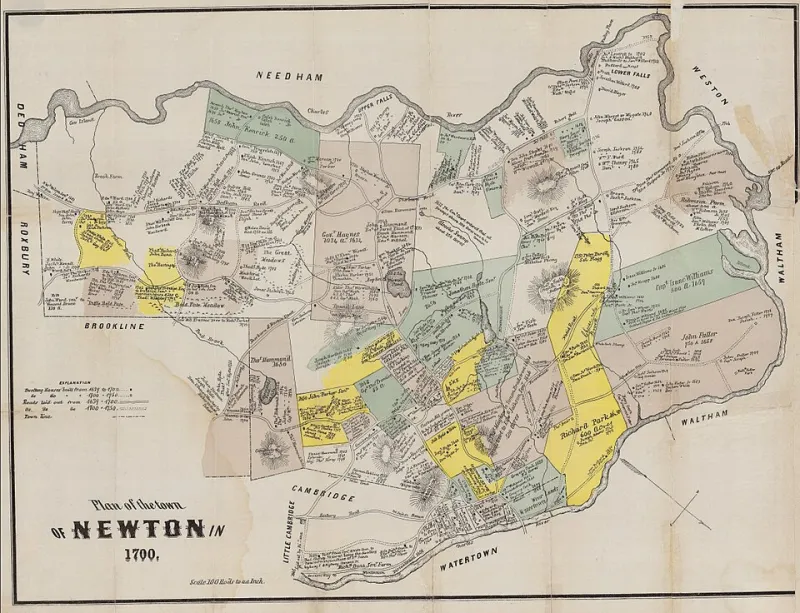
Photo: Unknown authorUnknown author, Public domain, via Wikimedia Commons
There's a particular cruelty in losing the very sense your life's work depends on. A musician going deaf. A painter losing the use of his hands. A cartographer going blind.
For most people in the nineteenth century, that kind of loss was a full stop. You stepped back. You retired. You let someone else carry the work forward. The world was not set up to accommodate people who'd lost the tools their profession required, and the expectation — spoken or unspoken — was that you'd accept that and find a quieter corner of life to occupy.
Oscar H. Lieber didn't accept it.
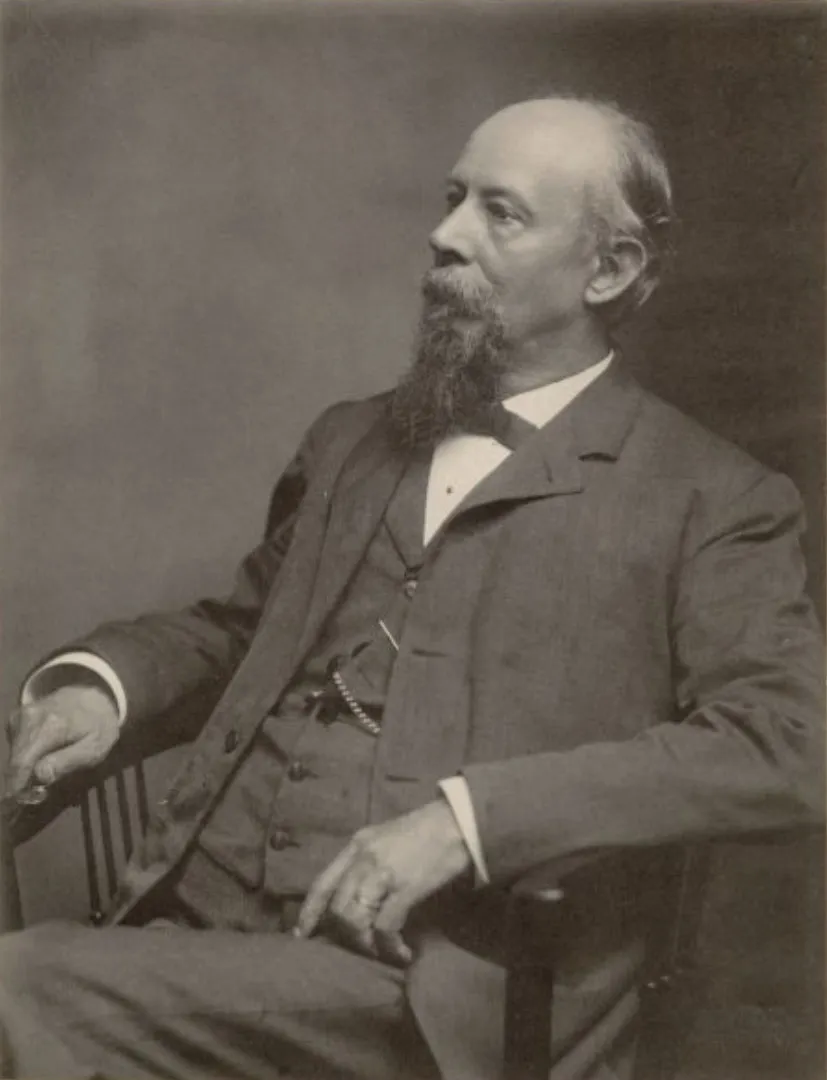 Photo: Oscar H. Lieber, via indyencyclopedia.org
The Man Before the Darkness
Lieber was a German-born geologist and surveyor who emigrated to the United States in the 1840s and built a career that put him at the center of American cartographic work during one of the most expansive periods in the country's history. He worked on geological surveys across the South, producing detailed maps of South Carolina's mineral resources at a time when accurate geographic data was as valuable as gold — sometimes more so.
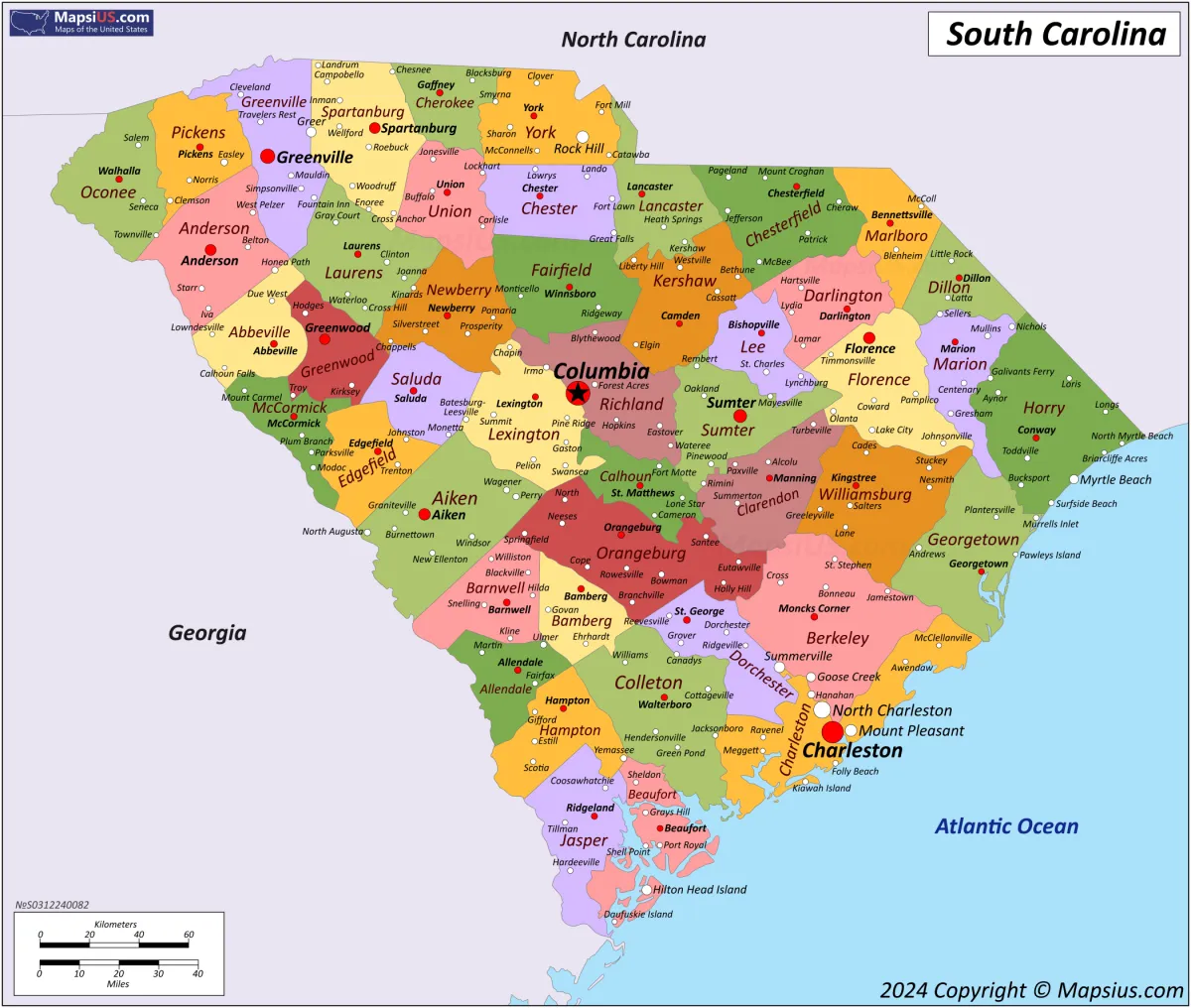 Photo: South Carolina, via mapsius.com
He was meticulous, systematic, and possessed of the particular kind of patience that serious mapping requires. You don't produce accurate surveys by rushing. You take measurements, you check them, you triangulate, you record, and then you do it again. Lieber was good at the work, and the work suited him.
Then, in the 1850s, his vision began to fail. The cause isn't entirely clear from the historical record — this was an era before modern ophthalmology had much to offer — but the trajectory was unmistakable. The man who had spent his career reading the fine details of the landscape was losing his ability to see.
The Choice That Changed Everything
The conventional response to Lieber's situation would have been to step away from fieldwork, perhaps consult on projects from a distance, and gradually fade from active practice. That was the path of least resistance, and nobody would have blamed him for taking it.
Instead, he began experimenting.
If he couldn't read a map with his eyes, he would learn to read it with his hands. He started developing methods for producing raised-relief maps — tactile representations of geographic data that could be understood through touch rather than sight. This wasn't an entirely new concept in Europe, where a few pioneers had experimented with tactile maps for educational purposes, but it was virtually unknown in American practice, and nobody had applied it to the kind of serious professional survey work that Lieber was involved in.
The technical challenges were formidable. A visual map communicates through line, color, and symbol — a vocabulary that the eye decodes almost instantaneously. A tactile map has to communicate the same information through texture, relief, and spatial relationship, in a medium that the fingertips read slowly and sequentially rather than all at once. The translation required rethinking not just the production methods but the fundamental grammar of cartography itself.
Rebuilding the Language of the Land
Lieber developed a system of embossed symbols and graduated surface textures to represent different types of terrain, elevation changes, waterways, and geographic features. He worked with craftsmen to produce maps on materials that could hold fine tactile detail — pressed paper, molded surfaces, carefully tooled materials that would survive handling.
What emerged wasn't simply a workaround. It was a genuinely different way of understanding geographic space.
Sighted cartographers, Lieber discovered, had been unconsciously designing maps for the eye in ways that didn't always reflect how space is actually experienced on the ground. A visual map is a bird's-eye abstraction — it presents the landscape as if from above, flattened and color-coded. But a person moving through a landscape experiences it sequentially, as a series of transitions: the ground rising, the river narrowing, the forest giving way to open field. Tactile mapping, by necessity, had to capture those transitions in ways that visual mapping had never prioritized.
The insights that came from this enforced rethinking were, in some ways, more useful than the maps themselves.
The Legacy That Outlasted the Maps
Lieber's direct influence on the broader development of accessible cartography in the United States operated mostly through the channels that nineteenth-century knowledge traveled — correspondence, professional publications, the slow diffusion of practice through networks of colleagues and students. He wasn't celebrated in his own time the way that a later era might have celebrated him.
But his work fed into a current that would eventually produce the American Printing House for the Blind's cartographic programs, the development of standardized tactile map conventions in the twentieth century, and ultimately the digital tools that now allow blind and visually impaired Americans to access geographic information in ways that would have seemed miraculous to Lieber's contemporaries.
 Photo: American Printing House for the Blind, via aphassets.blob.core.windows.net
The line isn't always straight, and the credit isn't always properly assigned. That's how a lot of important history works — the foundational contributions get absorbed into the stream, and what survives is the current rather than the name of the person who first changed its direction.
What Darkness Actually Teaches
There's a version of Lieber's story that's simply about perseverance — the inspirational narrative of a man who refused to quit. That version is true as far as it goes, but it misses something more interesting.
Losing his sight didn't just force Lieber to keep working under harder conditions. It forced him to think differently about the thing he'd spent his career doing. The assumptions he'd carried as a sighted mapmaker — assumptions so fundamental he'd never had to examine them — became visible the moment they stopped working. He had to ask questions about the nature of spatial representation that his colleagues, with their functioning eyes and their inherited professional conventions, had no reason to ask.
That's the paradox at the heart of his story. The loss that should have ended his career gave him a perspective his career had never offered. He couldn't see the land anymore, but he understood it — and understood the problem of communicating it — more deeply than he ever had before.
The maps he drew after going blind were fewer and harder-won than the ones he'd produced before. But the thinking behind them was richer, stranger, and more original. And it's that thinking — not the maps themselves — that found its way into the future.
Sometimes the vault holds things that were hidden in plain sight all along. Sometimes it takes the darkness to reveal them.