Kitchen Table Empires: Seven Billion-Dollar Brands That Started With Absolutely Nothing

When Desperation Becomes Innovation
Some of America's most recognizable brands didn't start in gleaming corporate headquarters or well-funded incubators. They began in kitchens, garages, and spare bedrooms, launched by people who had nothing to lose and everything to prove. Here are seven companies that prove the best business plans sometimes start with pure desperation.
Celestial Seasonings: The Hippie Tea That Conquered Suburbia
In 1969, nineteen-year-old Mo Siegel was living in a Boulder, Colorado, commune and barely scraping by. He started picking wild herbs in the Rocky Mountains, drying them in his girlfriend's apartment, and selling homemade tea blends in hand-sewn muslin bags.
 Photo: Rocky Mountains, via www.goodfreephotos.com
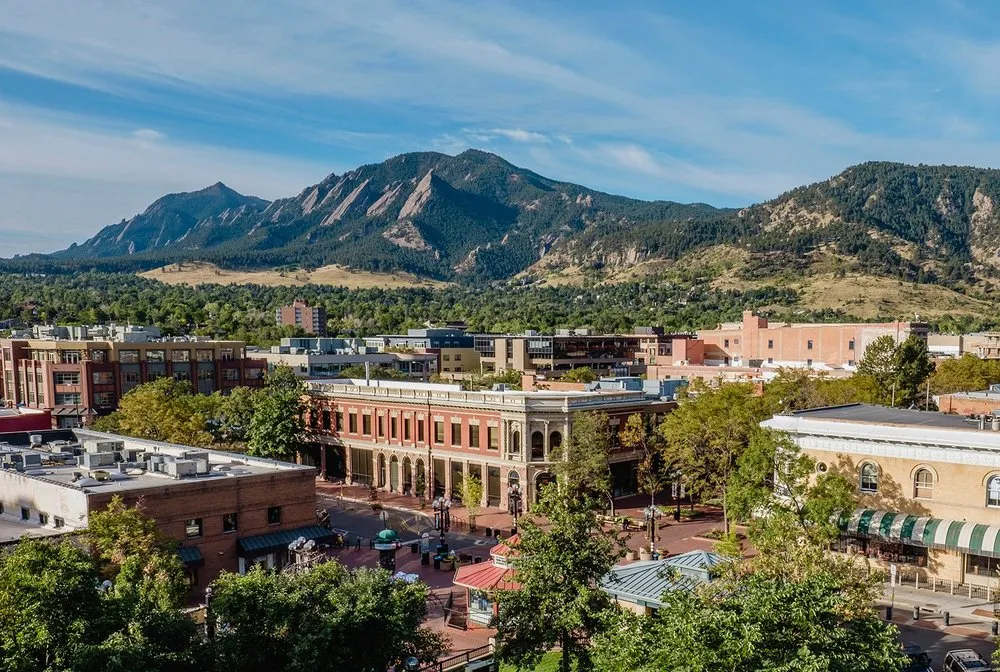 Photo: Boulder, Colorado, via dynamic-media-cdn.tripadvisor.com
Siegel had no business experience, no money, and no idea that he was creating what would become a $100 million tea empire. He just knew that people liked his herbal blends and were willing to pay for them. The company's whimsical packaging and New Age philosophy eventually made Celestial Seasonings a grocery store staple, proving that sometimes the counterculture knows exactly what mainstream America wants.
The kicker? Siegel was so broke when he started that he had to trade tea for printing costs. The printer who agreed to that deal probably wishes he'd asked for equity instead.
Yankee Candle: The Christmas Gift That Became a Christmas Empire
Sixteen-year-old Mike Kittredge couldn't afford to buy his mother a Christmas present in 1969, so he melted down some crayons and made her a candle. When a neighbor saw it and offered to buy it for more than the cost of the crayons, Kittredge realized he might be onto something.
He started making candles in his parents' Massachusetts garage, using a neighbor's kitchen to melt wax when his parents got tired of the smell. Kittredge had no grand vision of building America's largest candle company—he just needed spending money for high school.
Fifty years later, Yankee Candle generates over $800 million in annual revenue. Kittredge's accidental discovery that Americans would pay premium prices for scented candles created an entire industry. Not bad for a teenager who just wanted to avoid showing up empty-handed on Christmas morning.
Mrs. Fields: The Housewife Who Accidentally Invented Premium Cookies
Debbi Fields was a twenty-year-old housewife in 1977 when she decided to open a cookie store in Palo Alto, California. She had no business training, no restaurant experience, and advisors who told her that "a cookie store is a bad idea" because "America likes crispy cookies, not chewy cookies."
On opening day, Fields sold exactly zero cookies until she started walking around the shopping center giving them away for free. Once people tasted them, they came back to buy more. She'd accidentally discovered that Americans didn't know they wanted gourmet cookies until someone showed them what gourmet cookies could taste like.
Fields built Mrs. Fields into a global franchise empire worth hundreds of millions, proving that sometimes the best market research is just making something you'd want to eat yourself.
Snapple: The Health Food Store Experiment
In 1972, three friends in Brooklyn—Leonard Marsh, Hyman Golden, and Arnold Greenberg—were running a health food store and wondering why all the natural beverages tasted terrible. They started mixing their own fruit drinks in the back of the store, using real fruit juice and natural ingredients.
They called their company Unadulterated Food Products, which tells you everything you need to know about their marketing sophistication. The trio had no beverage industry experience and were basically winging it with whatever fruit they could buy wholesale.
Their accidental breakthrough came when they discovered that carbonating their fruit drinks made them taste even better. Snapple eventually sold for $1.7 billion, proving that sometimes the best way to enter an industry is to completely ignore how it's supposed to work.
Ben & Jerry's: The Ice Cream Shop for People Who Hated Business
Ben Cohen and Jerry Greenfield were college friends who couldn't figure out what to do with their lives after graduation. In 1978, they took a $5 correspondence course on ice cream making and opened a shop in a renovated gas station in Burlington, Vermont.
 Photo: Burlington, Vermont, via i2-prod.football.london
Neither had any business experience. Cohen couldn't taste the ice cream properly because of a sinus condition, so he focused on texture and chunks. Greenfield was a lab technician who treated ice cream like a science experiment. They gave away free ice cream on their first anniversary because they couldn't figure out how else to celebrate.
Their amateur approach to business—profit-sharing, environmental activism, and a policy that the highest-paid employee couldn't earn more than five times what the lowest-paid employee made—accidentally created one of America's most beloved brands. Ben & Jerry's sold to Unilever for $326 million, proving that sometimes not knowing the rules is the best way to break them.
Starbucks: The Coffee Shop That Almost Wasn't
Howard Schultz wasn't even a founder of Starbucks—he was just a salesman trying to sell them espresso machines in 1981. The original Starbucks was a small Seattle coffee bean retailer that had no interest in becoming a café.
Schultz became obsessed with the idea after visiting Italy and seeing how coffee culture worked there. When Starbucks' founders refused to expand into cafés, Schultz left to start his own company, Il Giornale. He eventually bought Starbucks for $3.8 million and merged the companies.
Schultz had no restaurant experience and was basically trying to transplant Italian café culture into a country that drank instant coffee from vending machines. His timing was terrible, his concept was untested, and nobody thought Americans would pay premium prices for coffee.
Starbucks is now worth over $100 billion. Schultz's miscalculation was thinking small.
The Pattern Nobody Saw Coming
These founders shared something more valuable than business plans or venture capital: they had direct experience with problems that needed solving. They weren't trying to disrupt industries—they were just trying to make things they wanted to use themselves.
Their success stories remind us that the best business ideas often start with someone saying, "Why doesn't this exist?" followed by, "I guess I'll have to make it myself." Sometimes the most unlikely entrepreneurs are the ones who don't know enough about business to understand why their ideas shouldn't work.