The Rejection Hall of Fame: Seven Careers That Started with Getting Fired

When the Door Slams Shut, Build a Better Building
Getting fired is supposed to be career suicide. Tell that to these seven Americans who turned pink slips into blueprints for revolution. Their stories prove that sometimes the best thing that can happen to an innovator is getting kicked out of the very industry they're destined to transform.
1. The Railroad Engineer Who Redesigned Everything
Malcolm McLean was a truck driver turned transportation executive who kept pestering his railroad bosses with a crazy idea: what if we loaded entire truck trailers onto ships instead of unloading and reloading cargo piece by piece?
His supervisors at Pan-Atlantic Steamship Corporation thought he was nuts. Moving cargo had worked the same way for centuries. Why fix what wasn't broken?
After years of dismissed memos and eye-rolls at meetings, McLean was "encouraged to pursue other opportunities." So he took his severance pay, bought his own ships, and invented containerized shipping—the system that now moves 90% of global trade.
Today, every iPhone, every imported car, every banana in your grocery store traveled in a container designed around McLean's rejected idea. The Port of Los Angeles alone handles more cargo in a day than entire countries moved in a year before containerization. McLean's former employers? They went out of business trying to compete with the revolution he started.
 Photo: Port of Los Angeles, via c8.alamy.com
2. The Radio Producer Who Wouldn't Stop Talking
Rick Dees was fired from his radio job in Memphis for playing a novelty song called "Disco Duck" that his program director called "career suicide." The song was silly, unprofessional, and completely off-brand for the station's serious music format.
Dees disagreed. He thought radio had become too stuffy, too predictable. So after getting canned, he took "Disco Duck" to a small independent label, recorded it himself, and watched it climb to #1 on the Billboard Hot 100.
More importantly, Dees used his firing as motivation to develop a completely new radio format: high-energy morning shows mixing music, comedy, and celebrity interviews. The "Rick Dees Weekly Top 40" became the most syndicated radio show in history, heard in more countries than any program before or since.
Every morning DJ doing wacky voices, every radio show featuring celebrity call-ins, every countdown program on American radio—they're all following the playbook written by a guy who got fired for playing a song about a dancing duck.
3. The Architect Who Built a New America
Julia Morgan was repeatedly rejected from architecture firms across San Francisco, not because she lacked talent—she was the first woman admitted to the prestigious École des Beaux-Arts in Paris—but because "women don't understand construction."
After her fifteenth rejection letter, Morgan stopped applying to other people's firms and opened her own. Her first major commission came from newspaper magnate William Randolph Hearst, who had been turned down by every major architectural firm in California. They said his vision for Hearst Castle was "unbuildable."
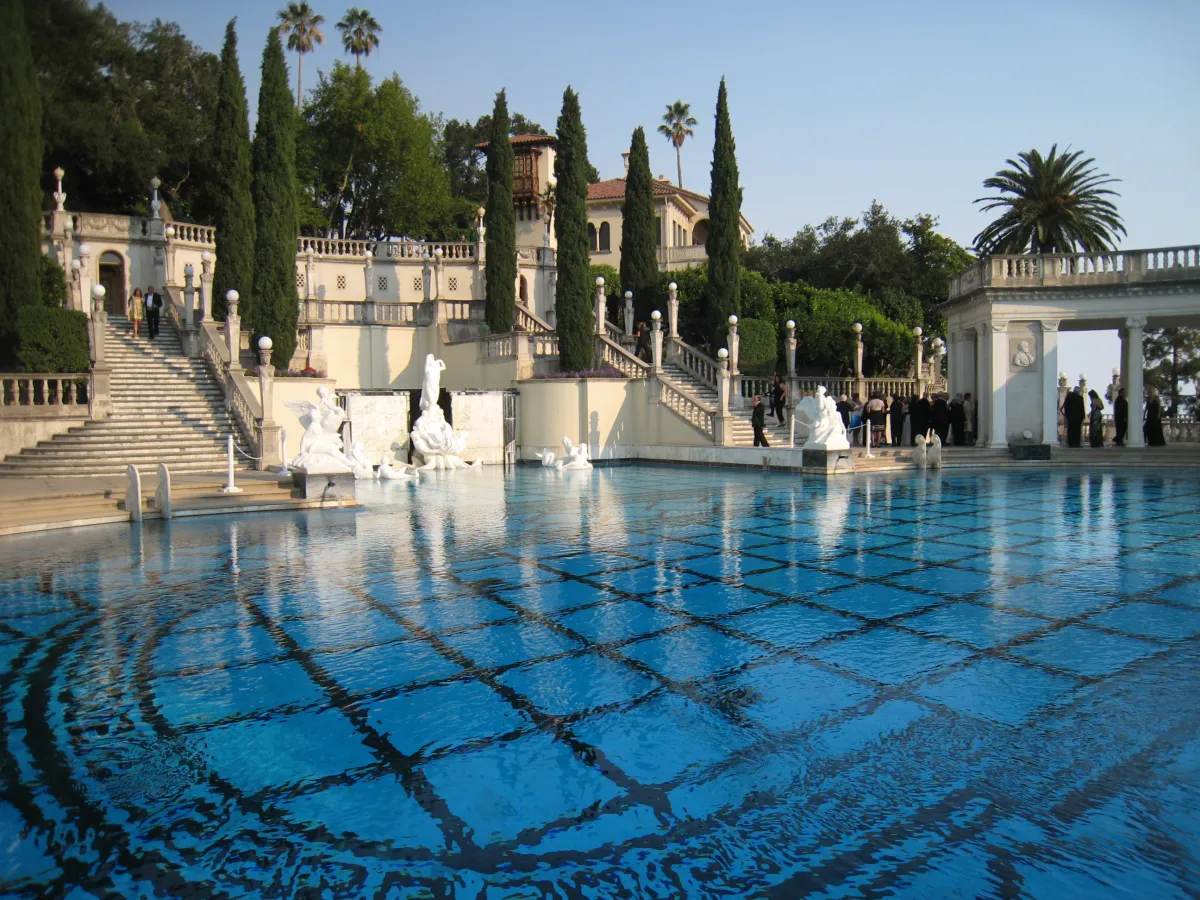 Photo: Hearst Castle, via rebeccachapa.files.wordpress.com
Morgan and Hearst were a perfect match: two people the establishment had written off. Together, they created not just Hearst Castle, but a new approach to American architecture that blended European grandeur with California innovation.
By the time Morgan retired, she had designed over 700 buildings, including the YWCA headquarters that housed thousands of working women during World War II. The firms that wouldn't hire her spent decades trying to replicate her success.
4. The Filmmaker Who Rewrote Hollywood
George Lucas was fired from his job at a major studio after executives called his space opera script "too weird" and "uncommercial." Science fiction was box office poison, they explained. Nobody wanted to see movies about robots and space battles.
Lucas took his script to every major studio in Hollywood. Universal passed. Paramount passed. Columbia passed. Finally, 20th Century Fox agreed to fund it, but only because they needed a cheap summer filler.
Star Wars became the highest-grossing film in history at the time. More importantly, Lucas used his success to build an entirely independent filmmaking empire. Industrial Light & Magic revolutionized special effects. Skywalker Sound changed how movies sound. Lucasfilm proved that filmmakers didn't need studio approval to create blockbusters.
 Photo: Industrial Light & Magic, via blogger.googleusercontent.com
The executives who called Star Wars "uncommercial" spent the next decade desperately trying to create their own space operas. Meanwhile, Lucas was building the template for modern independent filmmaking that directors from Steven Spielberg to Christopher Nolan would follow.
5. The Chef Who Cooked Up a Revolution
Alice Waters was fired from her teaching job for serving students food she grew in the school garden instead of following the approved cafeteria menu. School administrators called her approach "unprofessional" and "unsanitary."
Waters believed kids should eat fresh, locally-grown food instead of processed cafeteria meals. When the school board disagreed, she was shown the door.
So Waters opened Chez Panisse in Berkeley, California, with the radical idea that restaurants should serve food grown by local farmers instead of shipped from industrial suppliers. Food critics called it a fad. Established restaurateurs said it would never scale.
Chez Panisse became the birthplace of California cuisine and the farm-to-table movement that now dominates American dining. Waters' "unprofessional" approach to food is now taught in culinary schools worldwide. The school that fired her eventually hired her back as a consultant to redesign their entire food program.
6. The Software Engineer Who Debugged Everything
Ida Rolf was let go from her programming job at IBM for spending too much time "fixing problems that weren't her responsibility." She kept identifying flaws in other people's code and suggesting improvements, which her supervisors found disruptive.
After leaving IBM, Rolf developed a systematic approach to identifying and fixing software problems that became known as "Rolfing"—not the massage technique, but a debugging methodology that's still used by programmers today.
More importantly, Rolf's obsession with fixing other people's problems led her to create the first comprehensive software testing protocols. Her methods became industry standard, adopted by every major technology company including, eventually, IBM.
7. The Journalist Who Broke All the Rules
Hunter S. Thompson was fired from Rolling Stone for missing deadlines, fabricating quotes, and writing articles that "read more like novels than journalism." His editors wanted objective reporting. Thompson wanted to tell the truth as he experienced it.
After getting canned, Thompson invented "Gonzo journalism"—a style of reporting that put the writer directly into the story. Fear and Loathing in Las Vegas became the blueprint for a new kind of American journalism that influenced everyone from Michael Moore to Jon Stewart.
Thompson proved that sometimes the most important stories can only be told by breaking the rules. His "unprofessional" approach to journalism opened doors for a generation of writers who understood that objectivity and truth aren't always the same thing.
The Pattern Hidden in Plain Sight
Each of these stories follows the same arc: establishment rejection, personal reinvention, industry transformation. These weren't people who failed to fit existing systems—they were people whose ideas were too big for the systems that employed them.
Getting fired forced them to build something new instead of trying to fix something old. Their rejections became their redirections, pushing them toward innovations that existing institutions couldn't have supported.
In America, sometimes the most successful career move is getting kicked out of your career entirely. These seven people prove that when the door slams shut, the smartest thing you can do is start building your own building.