Late Bloomers, Unlikely Giants: Seven Americans Who Hit Their Stride After Forty

American culture has a complicated relationship with late success. We love a comeback story in theory, but in practice we tend to organize our expectations around early achievement — the prodigy, the wunderkind, the thirty-under-thirty list. The implicit message is that if you haven't arrived by a certain age, you've probably missed your window.
History keeps disagreeing with that message. Loudly and repeatedly.
Here are seven Americans who, at forty or beyond, looked like they'd already played their hand — and then quietly changed everything.
1. Ray Kroc — The Milkshake Machine Man Who Built the Golden Arches at 52
By the time Ray Kroc drove out to San Bernardino, California, in 1954 to investigate why a small hamburger stand had ordered eight of his Multimixer milkshake machines, he was 52 years old and had spent decades bouncing between sales jobs. He'd sold paper cups. He'd played piano in small venues. He'd pushed milkshake equipment across the Midwest during years when his health was unreliable and his finances were perpetually uncertain.
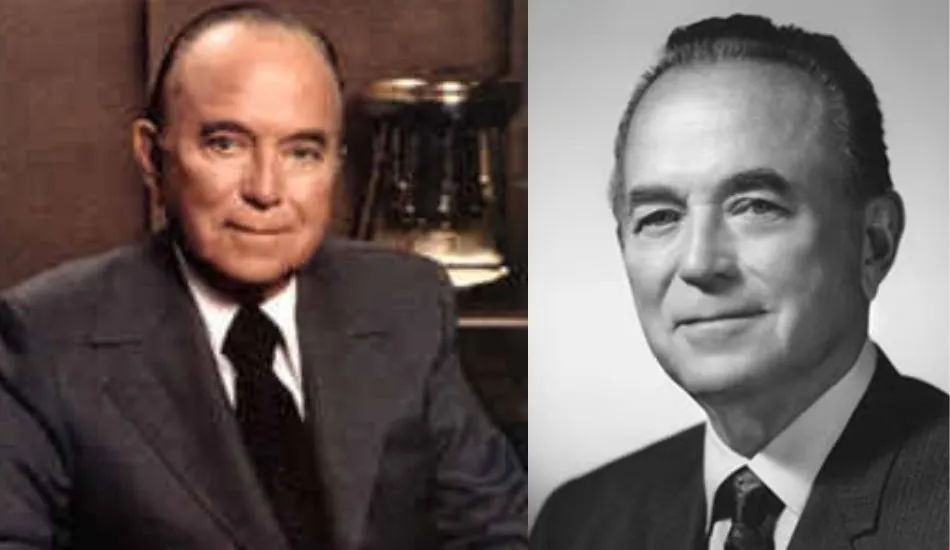 Photo: Ray Kroc, via fanzineblog.co.uk
The McDonald brothers' operation — clean, fast, efficient, and wildly popular — hit him like a revelation. Within a year, he'd negotiated the right to franchise the concept nationally. Within a decade, McDonald's was reshaping not just American fast food but American real estate, labor markets, and the entire concept of standardized consumer experience.
Kroc's low point? Around age 50, he was battling diabetes, had lost his gallbladder, and was still living on sales commissions. The golden arches were still five years away.
2. Grandma Moses — The Farm Woman Who Picked Up a Brush at 78
Anna Mary Robertson Moses spent most of her life doing farm work in rural upstate New York. She'd raised children, worked alongside her husband, and by the time she was in her seventies, severe arthritis had made the embroidery she loved nearly impossible to continue. So she switched to painting — largely because it was easier on her hands.
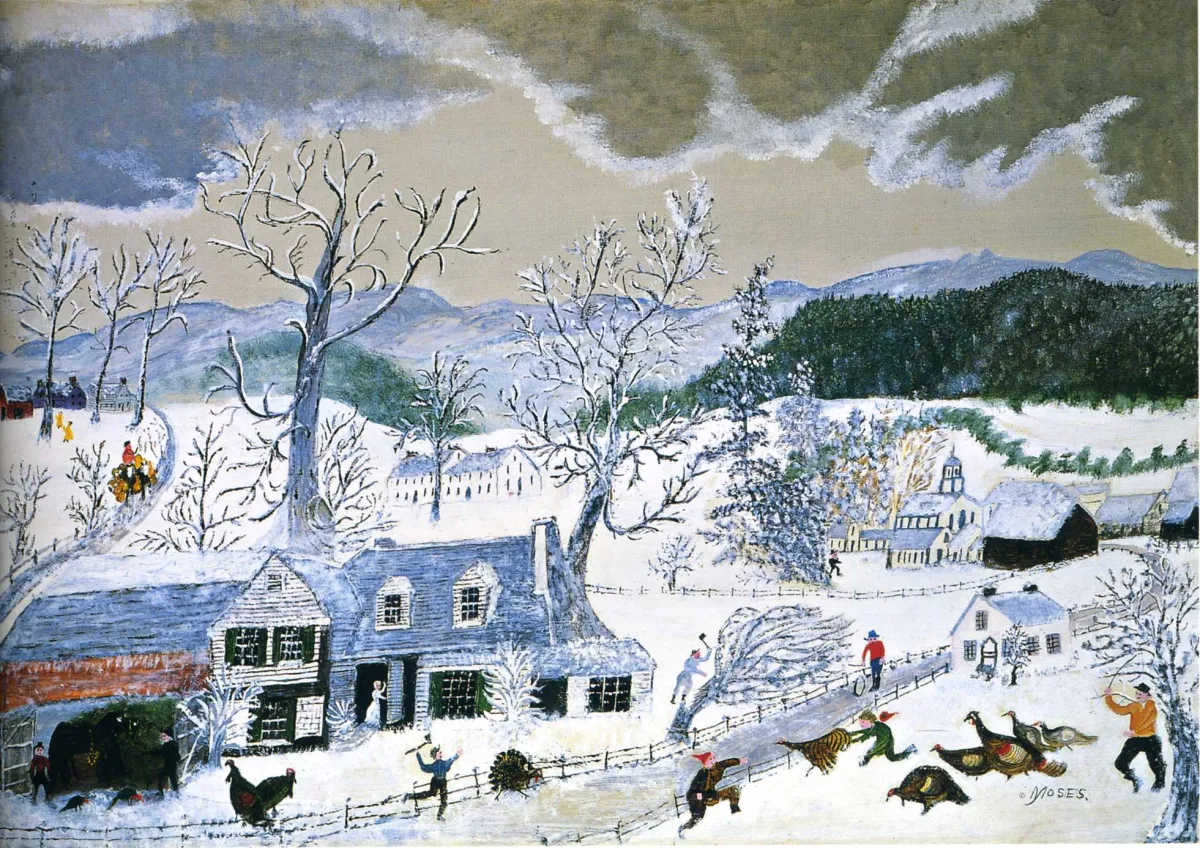 Photo: Grandma Moses, via www.artchive.com
She was 78 years old when a New York art collector named Louis Caldor spotted her paintings hanging in a drugstore window in Hoosick Falls, New York, and brought them to the attention of the Galerie St. Etienne in New York City. Within a year, her work was in a major exhibition. Within a few years, she was a genuine American cultural phenomenon — her folk art scenes of rural New England life appearing on greeting cards, in museum collections, and eventually on a U.S. postage stamp.
Grandma Moses painted until she was 101. She completed more than 1,500 works. She didn't start until most people her age had already stopped everything.
3. Harland Sanders — The Man Who Franchised a Recipe at 62
Harland Sanders had failed at more things than most people attempt. He'd worked as a farmhand, a streetcar conductor, a railroad fireman, a lawyer (briefly, and badly), an insurance salesman, a gas station operator, and a motel owner. He'd been involved in a parking lot shootout. He'd built a roadside restaurant in Corbin, Kentucky, that was doing well — until a new highway bypassed it entirely and the business collapsed.
He was in his early sixties, collecting a Social Security check of $105 a month, when he loaded his car with a pressure cooker and his spice blend and started driving around the country trying to sell restaurants on his fried chicken recipe in exchange for a small royalty on every piece sold.
Most of them said no. He kept driving. By the time Kentucky Fried Chicken was a national brand, Sanders had become one of the most recognizable faces in American advertising — a white-suited, white-bearded grandfather figure who'd built an empire out of a recipe and an absolute refusal to accept that it was too late.
4. Vera Wang — The Figure Skater Who Reinvented Bridal Fashion at 40
Vera Wang spent her youth as a competitive figure skater — good enough to compete seriously, not quite good enough to make the Olympic team. After that door closed, she pivoted to fashion journalism, spending 16 years at Vogue and then moving to Ralph Lauren as a design director. By conventional measures, it was a successful career. But Wang had a specific vision for what she wanted to create, and the opportunities to do it hadn't materialized.
When she got engaged at 39 and couldn't find a wedding dress she actually liked, she designed her own. That experience crystallized something. At 40, she opened her first bridal boutique in New York City — a decision that, by any reasonable calculation, looked like a late and risky pivot.
Within a decade, Vera Wang had redefined what American bridal fashion could look like. Her aesthetic — sophisticated, architectural, genuinely fashion-forward — pulled wedding dress design out of the purely sentimental and into the realm of serious couture. She dressed Olympic figure skaters (her original world, finally circling back) and became one of the most influential designers in the country.
5. Samuel L. Jackson — The Stage Actor Who Became a Movie Star at 43
Samuel L. Jackson had been working in theater and television for years — respected within those circles, largely unknown outside them. He'd battled serious addiction issues in his thirties, gone through rehabilitation, and rebuilt his life and career with remarkable discipline. But mainstream Hollywood hadn't found him yet, or hadn't looked hard enough.
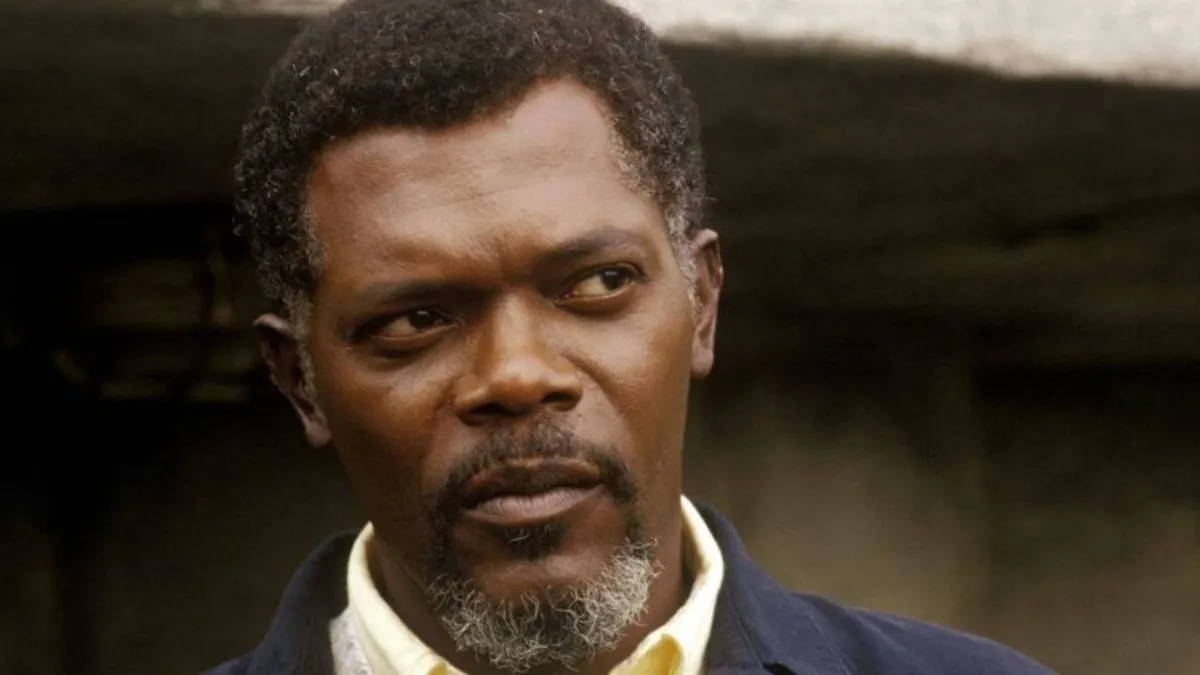 Photo: Samuel L. Jackson, via static1.moviewebimages.com
He was 43 when Quentin Tarantino cast him in Pulp Fiction in 1994. The performance was so electric — so completely, unmistakably itself — that it landed him an Academy Award nomination and rewrote his career trajectory overnight. What followed was one of the most prolific runs in Hollywood history: more than 150 films, a record-setting box office cumulative gross, and a cultural presence that made him one of the most recognizable actors on the planet.
The years of stage work, of grinding through smaller roles, of rebuilding after personal crisis — none of it was wasted. All of it was preparation.
6. Julia Child — The Government Worker Who Taught America to Cook at 51
Julia Child worked for the OSS during World War II — not as a spy exactly, but in research and intelligence support roles that required a sharp mind and a tolerance for bureaucratic complexity. She was tall, funny, and deeply curious about everything, but cooking wasn't yet her obsession. That came later, when she moved to France with her diplomat husband and enrolled in Le Cordon Bleu cooking school in Paris at age 37.
She spent the next decade co-writing a cookbook that American publishers repeatedly declined to publish, calling it too long, too complicated, and too French for the American market. Mastering the Art of French Cooking finally appeared in 1961, when Child was 49. Her television show, The French Chef, launched in 1963, when she was 51.
What followed was a cultural transformation. Child didn't just teach Americans how to make boeuf bourguignon. She changed the entire conversation around food in this country — making cooking aspirational, joyful, and accessible to home cooks who'd never considered it an art form before.
7. Charles Darwin — The Failed Medical Student Who Rewrote Biology at 50
Darwin had been considered something of a disappointment by his father, who pulled him out of medical school after Charles showed more interest in collecting beetles than attending lectures. He studied for the clergy instead — another path he never completed with much conviction. His famous voyage on the HMS Beagle happened in his twenties, but the observations he made there sat, developed, and were debated internally for more than two decades before he published anything.
On the Origin of Species appeared in 1859, when Darwin was 50 years old. It sold out on its first day. It also ignited one of the most consequential scientific and philosophical debates in human history — a debate that restructured biology, geology, anthropology, and eventually medicine.
The decades of apparent inaction were actually decades of rigorous thinking, evidence-gathering, and preparation. Darwin wasn't slow. He was thorough. And when he finally spoke, the world had to reorganize itself around what he said.
The Pattern Nobody Talks About
Look at these seven lives and a pattern emerges that doesn't fit neatly into the early-achiever narrative. In almost every case, the years before the breakthrough weren't wasted — they were load-bearing. The failures, the detours, the grinding obscurity all contributed something that pure early success rarely provides: depth, resilience, and a clarity about what actually matters.
The vault of unlikely success stories is full of people who peaked late. The question worth sitting with is whether we'd even recognize them if they showed up in our lives at thirty-nine, still figuring it out, still a few years away from the thing that would define them.
Probably not. And that might be worth remembering.