He Started by Mopping Up the Worst Days of People's Lives — and Ended Up Being the Person Who Saved What They Couldn't
The Smell He Never Forgot
Marcus Tillman will tell you that smoke has at least thirty different smells, and that learning to distinguish them changed his life. Not immediately — the distinction between the acrid bite of an electrical fire and the deeper, organic char of a structural wood burn didn't mean much to him at eighteen, when he was just trying to keep his head down and earn enough to pay rent in Valdosta, Georgia.
But the knowledge accumulated anyway, the way it does when you spend enough time in a place most people only ever see once, at the worst moment of their lives.
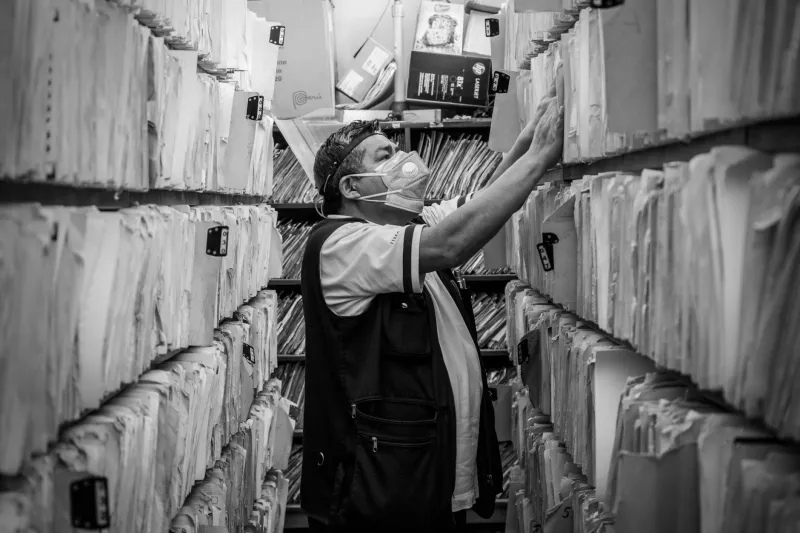
He started as an apprentice with Hendricks Restoration — a two-truck operation run by a former firefighter named Cal Hendricks who had figured out, in the mid-1970s, that there was steady money in cleaning up after disasters. Marcus's official job was to carry equipment, run the wet-vac, and do whatever Cal pointed at. His unofficial education began the first week, when Cal handed him a water-damaged ledger book from a flooded insurance office and said, "See if you can save that."
Marcus saved it.
The Science Hiding Inside the Mess
Restoration work looks, from the outside, like industrial cleaning. And it is, in part. But the part that most people miss — the part that Marcus began to obsess over almost immediately — is that it's also applied chemistry, structural engineering, materials science, and logistics, all happening simultaneously, usually under time pressure, in conditions that are frequently dangerous and always chaotic.
What happens to paper when it absorbs water? It depends on the paper's composition, the mineral content of the water, the temperature, and how long submersion lasted. What happens to a nineteenth-century oil painting exposed to smoke? It depends on the type of smoke, the varnish on the painting, the humidity in the room, and a dozen other variables. Get the intervention wrong — use the wrong solvent, apply the wrong temperature, move too fast — and you don't just fail to save something. You destroy it more thoroughly than the disaster did.
Marcus had no formal training in any of these disciplines. What he had was Cal Hendricks, who had learned by doing, and a local library where Marcus spent his evenings reading anything he could find on materials science, archival preservation, and industrial chemistry.
"Cal taught me to look," Marcus said in a 2015 profile in Preservation magazine. "The library taught me to understand what I was looking at."
When the Jobs Started Getting Bigger
By his early thirties, Marcus had bought out Cal's retirement share of the business and expanded into a regional operation covering most of South Georgia and the Florida Panhandle. His crews handled the standard workload: house fires, burst pipes, hurricane flooding. But word was spreading, quietly, about the guy in Valdosta who could save things other restorers had written off.
A county courthouse in Alabama called him in 1994, after a pipe burst in a records room and soaked two centuries of deed books and legal filings. Archivists from the state historical society had already declared the damage catastrophic. Marcus spent eleven days on-site, working with a technique he'd developed himself — a combination of controlled freeze-drying, interleaving with absorbent tissue, and a proprietary humidity sequencing protocol he'd been refining for years — and recovered approximately eighty percent of the collection.
The state archivist, a woman with a PhD from UNC Chapel Hill, later said it was the most impressive materials recovery she'd ever witnessed. She asked Marcus where he'd trained.
He told her about Cal Hendricks and the Valdosta Public Library.
She referred him to three colleagues within the month.
The Federal Calls
The work that changed Marcus's trajectory most dramatically came in 1998, when flooding in a federal records storage facility in the Southeast threatened several thousand boxes of mid-century military personnel files — irreplaceable documents affecting veterans' benefits claims and historical records. A FEMA contractor brought Marcus in as a subadvisor.
He walked through the facility for four hours before saying anything. Then he produced a written recovery sequence — phased by material type, temperature zone, and priority — that the facility's own preservation staff adopted almost wholesale.
Over the next decade, Marcus became, informally and then formally, one of the country's most sought-after disaster recovery consultants for cultural and historical institutions. He worked on a flooded university archive in New Orleans after Katrina. He advised on smoke damage remediation at a historic theater in Chicago. He helped develop recovery protocols adopted by the National Archives.
He still doesn't have a college degree. He's been offered honorary ones from two universities and has declined both, politely.
What Destruction Taught Him About Preservation
The counterintuitive truth at the center of Marcus Tillman's career is that his expertise in preservation came entirely from his intimacy with destruction. He didn't learn what saved things by studying conservation in a laboratory. He learned it by watching what failed — by being present at the moment when something irreplaceable began to disappear and having to decide, in real time, whether it was possible to stop that process.
That experience built a kind of knowledge that's genuinely difficult to acquire any other way. He knows how materials fail because he has watched them fail, over and over, across forty years and thousands of sites. He knows which interventions work not because he read about them in a journal, but because he has tried them in burning buildings and flooded basements and the aftermath of industrial accidents.
"A lot of preservation people are trying to protect things from disaster," he said once, at a conference where he was, somewhat awkwardly, the keynote speaker. "I learned from inside the disaster. That's a different education."
The Unlikely Archivist
Marcus Tillman is in his early sixties now. His company employs thirty-one people and holds contracts with several federal agencies and a growing list of museums, universities, and historical societies. He is, by any reasonable measure, one of the most accomplished preservation specialists in the United States.
He got there by mopping floors, hauling wet debris, and paying close attention to things most people couldn't wait to stop looking at.
The worst days of other people's lives became the classroom where he learned to save what mattered. That's not the path anyone would design. But it's the one that worked.