He Never Left the Farm — and Somehow Changed the Way America Reads the Sky
A Porch, a Notebook, and a Question Nobody Asked Him to Answer
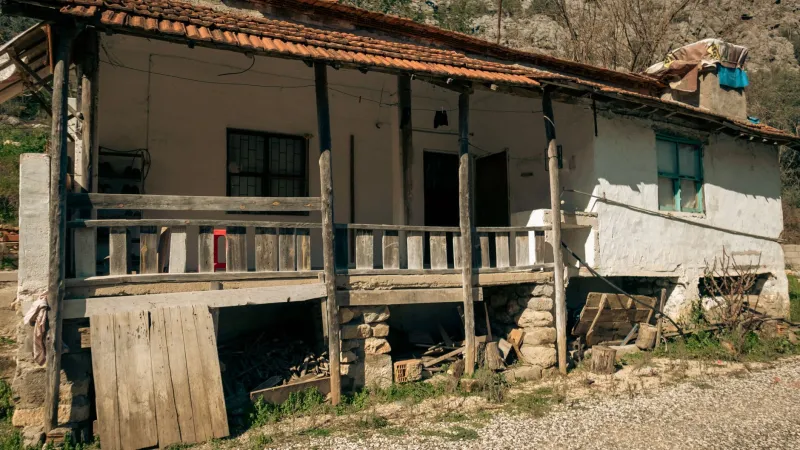
The porch faced west, which mattered. Ezra Pullen had figured out early that watching weather come in from the west gave you the best lead time, and lead time was the whole point. He was not a scientist. He was a farmhand in Caledonia County, Vermont, working land that belonged to someone else, living in a tenant house at the edge of a property that had been in the same family for three generations.
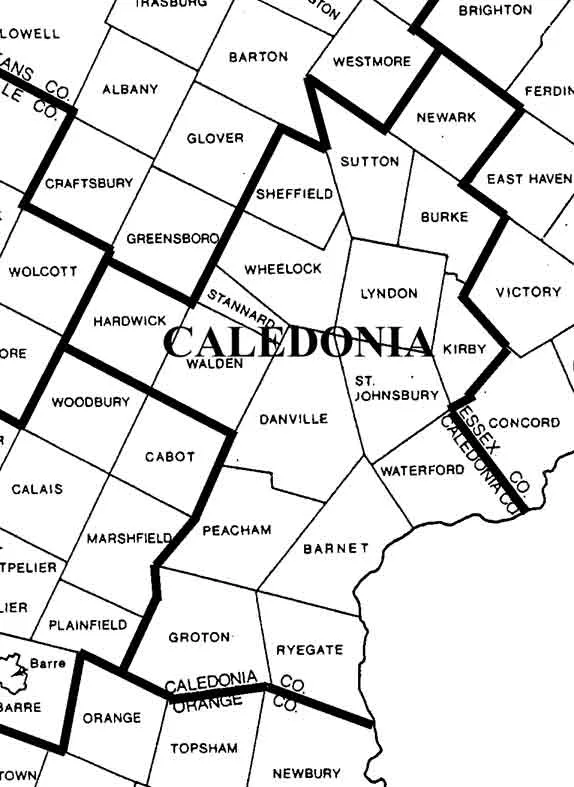 Photo: Caledonia County, Vermont, via old-maps.com
He started keeping weather records in 1887, the year he turned twenty-two. Nobody asked him to. There was no program, no grant, no interested professor who had set him on the path. He started because he was curious, and because the weather had direct consequences for his work, and because he noticed — with the kind of attention that only comes from having nothing to distract you — that certain atmospheric conditions reliably preceded certain outcomes.
The first notebook was a leftover farm ledger, the margins already printed with columns for livestock and seed purchases. Pullen used the blank backs of pages. He recorded temperature, wind direction, cloud formation, barometric pressure (once he had built a rudimentary barometer from instructions in an old almanac), and precipitation. He recorded these things twice a day, every day, without exception, for thirty-seven years.
The Methodology He Invented Because Nobody Taught Him Another One
Formal meteorology in the late nineteenth century was not exactly a precision science, but it had institutions — the U.S. Signal Corps, later the Weather Bureau, university departments with proper instruments and trained observers. What it did not have, in most rural areas, was consistent long-term local data. National systems were good at broad patterns. They were considerably less useful for predicting what the weather would do in a specific valley, over a specific ridge line, in a specific microclimate shaped by elevation and tree cover and proximity to water.
Pullen's data, accumulated over decades of daily observation from a single fixed point, was something the formal system had almost no equivalent for. He had, without intending to, built one of the most complete local atmospheric records in the region.
His methodology was peculiar in ways that turned out to matter. Because he had no formal training, he hadn't inherited the standard observation intervals or the standard recording conventions. He developed his own, based on what he was actually seeing. He tracked what he called "sky texture" — a set of descriptive categories he invented for cloud patterns that didn't map neatly onto official nomenclature but that, in practice, correlated remarkably well with precipitation outcomes over the following eighteen to thirty-six hours.
He also tracked what he called "ground feel" — soil moisture, frost depth, the behavior of specific plants on the property that he had observed responding consistently to pressure changes. It sounds eccentric. It was also, in effect, an early form of phenological observation, a methodology that professional ecologists would later formalize and study extensively.
The Moment the Professionals Started Paying Attention
In 1921, a meteorologist named Harold Fitch from the Vermont State Weather Service was trying to reconstruct historical precipitation patterns for a study on regional flooding risk. He needed local data going back as far as possible, and the official record for Caledonia County had significant gaps.
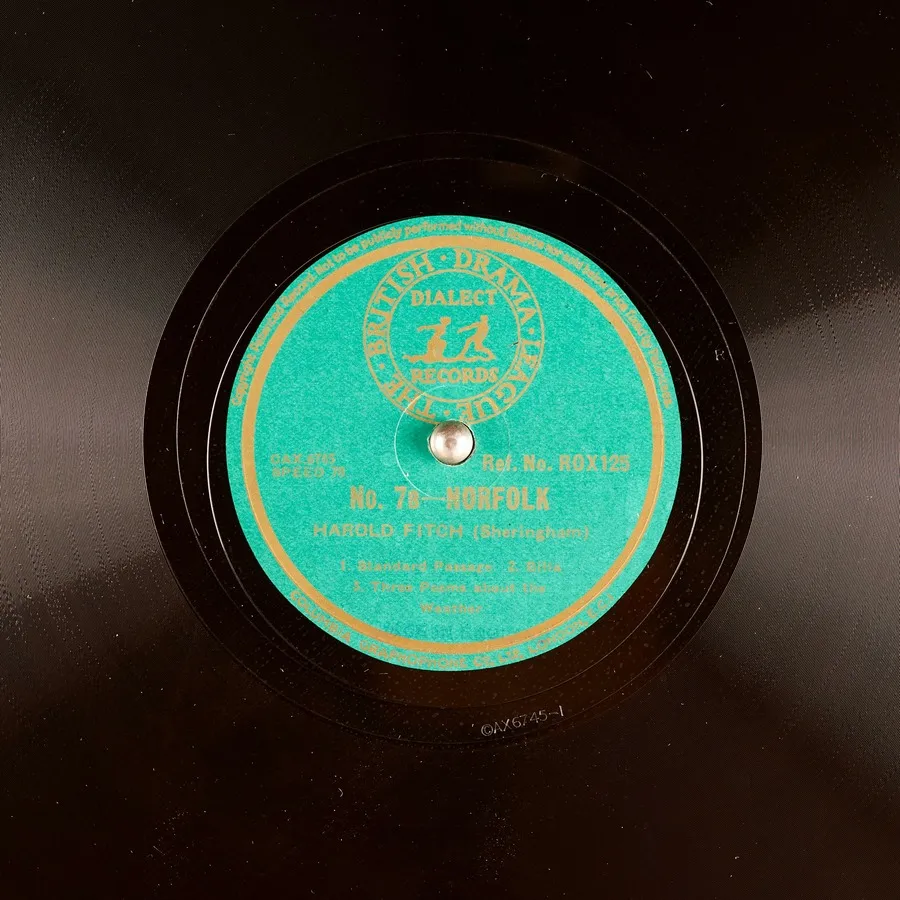 Photo: Harold Fitch, via archive.org
Someone pointed him toward Pullen. Fitch was skeptical — a farmhand's personal weather diary was not exactly what he had in mind — but he made the trip out of desperation more than curiosity.
What he found stopped him cold. Thirty-four years of daily records, meticulously maintained, internally consistent, and organized by a cross-referencing system Pullen had developed himself to identify recurring patterns. The handwriting was careful. The notation was precise. The data, when Fitch checked it against the fragmentary official records that did exist, aligned with a fidelity that was difficult to explain away.
Fitch spent three days at the tenant house. He left with transcriptions of the full record and a letter of thanks that Pullen kept folded in the back of his final notebook. The acknowledgment in Fitch's eventual paper was brief — "local observational data provided by E. Pullen of Caledonia County" — but it was there. It was the first time Pullen's name appeared in any scientific publication.
It would not be the last. Over the following decade, as regional forecasting methodology developed and researchers increasingly recognized the value of long-term local data, Pullen's records were referenced in at least six published studies. His cloud classification system, translated into formal terminology, was incorporated into a regional forecasting guide that remained in use through the 1950s.
What He Never Got, and What That Tells Us
Pullen was never offered a position with the Weather Bureau. He was never given a grant to continue his work or resources to improve his instruments. He was thanked, cited, and consulted — and then left on the porch in Caledonia County, which is where he had always been.
He died in 1931, still working the same land, still recording the weather twice a day. The final entry in his last notebook is dated three days before his death. It notes the temperature, the wind direction, an approaching low-pressure system from the northwest, and the probability, in his estimation, of significant snowfall within forty-eight hours.
It snowed heavily the following day.
The question of who gets to be called an expert in America has always been complicated by the question of who gets access to the institutions that confer that status. Pullen had no access. He had no degree, no professional network, no publication history, no credential of any kind. What he had was thirty-seven years of showing up on the same porch, at the same times, and writing down what he saw.
The professionals who eventually used his data had all of the institutional legitimacy he lacked. They also had a gap in their records that only he could fill — because he had been doing the unglamorous, repetitive, unrecognized work while they were building the institutions that would eventually come looking for it.
The Habit That Outran the Credential
There is a version of Pullen's story that gets told as a validation of formal education — look what a trained scientist could have done with his raw observational talent. That version is almost certainly wrong.
A trained scientist would have followed the standard observation protocols, used the standard instruments, recorded in the standard categories. They would have produced data that fit neatly into the existing system — and that meant the existing system's gaps would have remained gaps.
Pullen's value was inseparable from his outsider status. His idiosyncratic methodology, his invented categories, his decades of stubborn daily habit — these were not despite his lack of training. They were the product of it. He saw what he saw because nobody had told him what he was supposed to be looking for.
That's not an argument against expertise. It's an argument for paying attention to what happens when expertise has a blind spot — and for noticing who's been sitting on the porch, watching the sky come in from the west, long before anyone thought to ask.