
The Clipboard Doesn't Always Know
Sports has always had a gatekeeping problem. The people who decide who gets in — coaches, scouts, recruiters — are working with limited information, limited time, and a mental model of what a great athlete is supposed to look like. When someone doesn't fit the model, the easiest thing to do is send them home.
Sometimes that's the right call. And sometimes it produces the single most embarrassing personnel decision in the history of a franchise.
Here are seven athletes who were shown the door — and then came back to define the sport that tried to close it on them.
1. Michael Jordan — Cut Before He Could Fly
The story is almost too well-known to retell, but it's worth remembering what it actually felt like at the time: a fifteen-year-old kid in Wilmington, North Carolina, checking the varsity basketball roster at Emsley A. Laney High School and not finding his name on it.
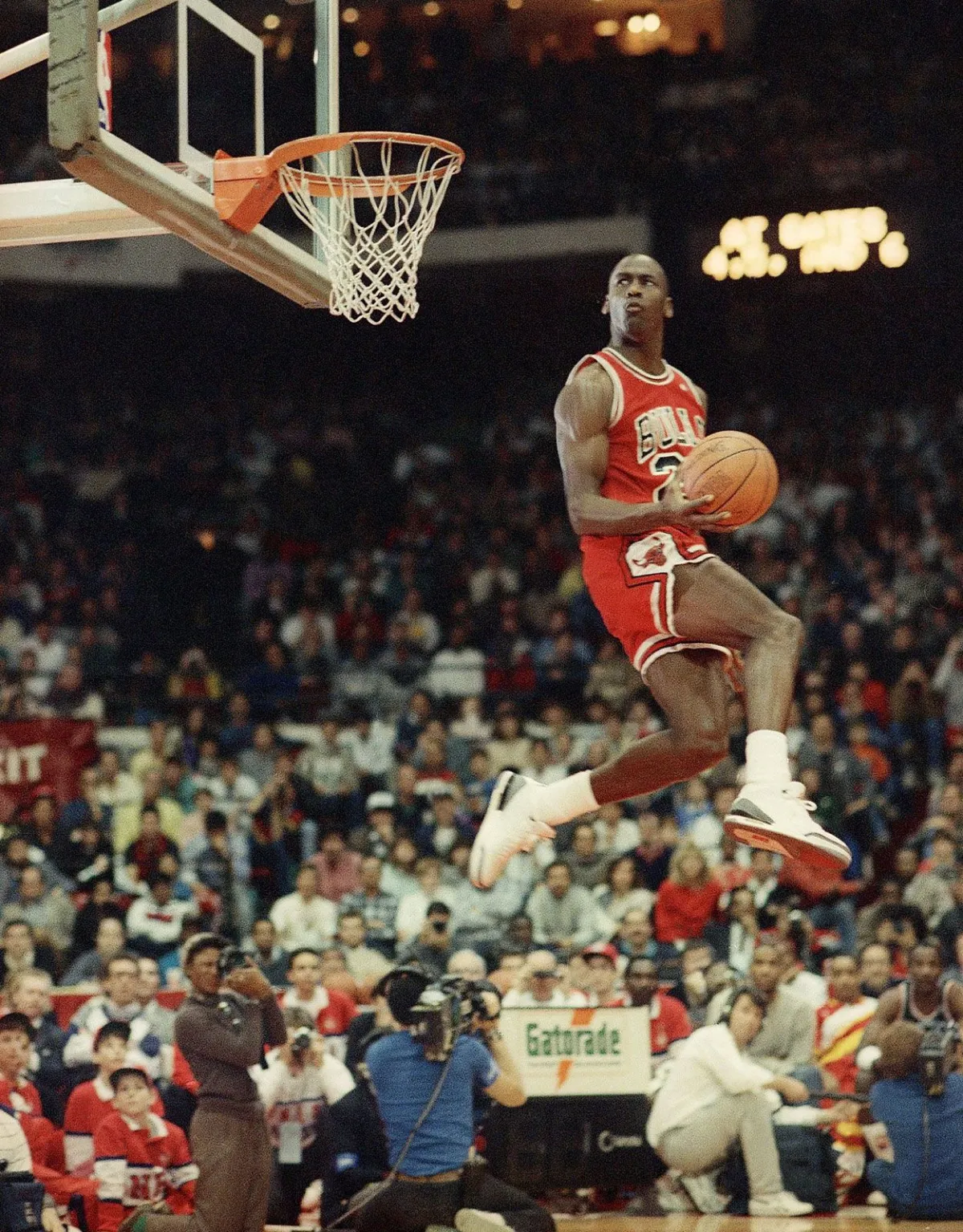 Photo: Michael Jordan, via cdn.britannica.com
Jordan went home and cried in his room. Then he went to work.
The coach who cut him, Clifton Herring, has said in interviews that the decision was straightforward — Jordan was a sophomore competing for a spot against older players, and the roster had no room. Herring also became, inadvertently, the most important person in Jordan's development, because Jordan used that list as fuel for the next thirty years.
The specific thing that kept Jordan in the game wasn't a mentor or a scholarship. It was spite, weaponized into discipline. He reportedly kept the memory of that rejection as a motivational touchstone throughout his entire career, visualizing it before games. The clipboard that cut him became the engine that drove six championships.
2. Kurt Warner — Stocking Shelves Between Snaps
Warner went undrafted in 1994. The Green Bay Packers released him before the season started. He spent the next several years playing in the Arena Football League and, famously, working the night shift stocking groceries at an Iowa supermarket for $5.50 an hour.
The person who kept him in the game was his wife, Brenda, who never stopped believing the NFL was the destination even when every piece of evidence pointed elsewhere. Warner has said repeatedly that without her, he would have walked away from football entirely.
He didn't. He signed with the St. Louis Rams in 1998, started the 1999 season as a backup, got his shot when the starter went down in the preseason — and proceeded to win the Super Bowl, the Super Bowl MVP, and the regular season MVP in the same year. The grocery store is now a historical footnote. The ring is not.
3. Wilma Rudolph — Told She'd Never Walk Normally, Let Alone Run
Before she became the first American woman to win three gold medals in a single Olympics, Wilma Rudolph spent her childhood in a leg brace. Born premature, the twentieth of twenty-two children in a Clarksville, Tennessee family, she survived polio, scarlet fever, and double pneumonia before her fifth birthday. Doctors told her family she would never walk without assistance.
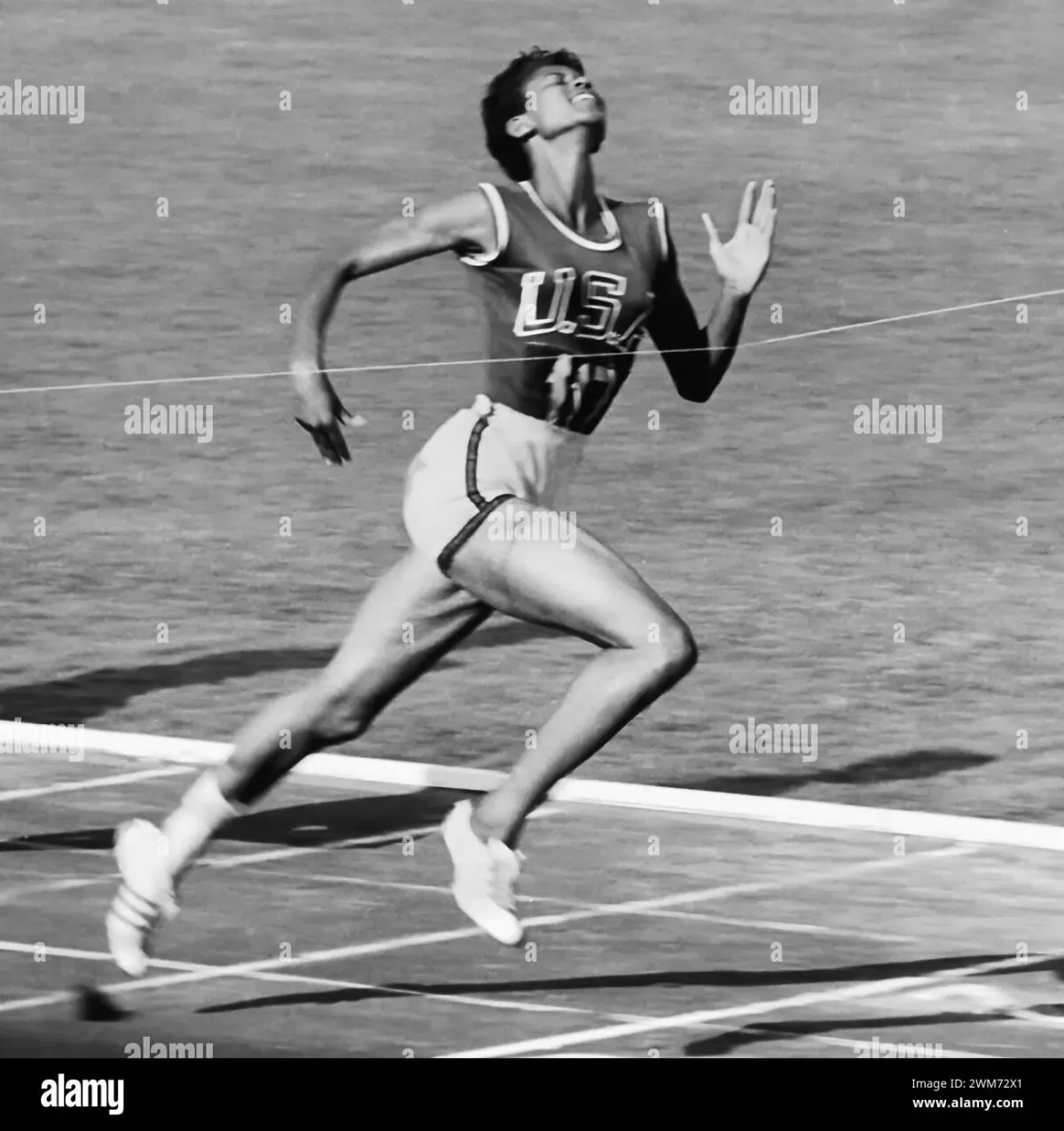 Photo: Wilma Rudolph, via c8.alamy.com
She removed the brace herself at age twelve, deciding she was done with it.
The person who changed her trajectory was her mother, Blanche, who drove her daughter fifty miles round-trip every week for years to receive physical therapy — a logistical commitment that, given the family's resources, was nearly impossible. That stubbornness was hereditary. Wilma channeled it into track, qualified for the 1956 Olympics at sixteen, and returned from Rome in 1960 as the fastest woman alive.
The doctors who wrote the original prognosis were not available for comment.
4. Dustin Pedroia — Too Small for the Scouts' Spreadsheets
Every scout who looked at Dustin Pedroia saw the same thing: a second baseman who was, at five-foot-eight and generously listed, simply not built for major league baseball. The tools weren't there. The frame wasn't there. Several teams passed on him in the 2004 draft specifically because they couldn't project his slight build surviving a full MLB season.
The Boston Red Sox took him in the second round, and even within the organization there were doubters. His minor league numbers were inconsistent, and more than one internal evaluation suggested he might top out as a utility player.
What kept Pedroia going was a combination of genuine stubbornness and an almost comical indifference to what the numbers said about him. He simply refused to accept the physical narrative. By 2008, he was the American League MVP. He played fourteen seasons for Boston, won four World Series rings, and became the standard against which undersized middle infielders are now measured — which is its own kind of revenge.
5. Jim Morris — The Big League Dream at Thirty-Five
Morris had his shot in the minors in the late 1980s and early 1990s, but injuries ended it. He became a high school coach in Big Lake, Texas, which is about as far from a major league stadium as you can get without leaving the country.
At thirty-five, his players made him a bet: if they won the district championship, he had to try out for the pros again. They won. He tried out. He threw 98 miles per hour in front of Tampa Bay Devil Rays scouts who could not believe what they were seeing.
The person who kept him in the game was, improbably, a group of teenagers who believed in their coach more than he believed in himself. Morris made his major league debut that same year. The story became a movie. The movie, for once, did not have to exaggerate anything.
6. Johnny Unitas — Cut by His Hometown Team
The Pittsburgh Steelers drafted Unitas in 1955 and cut him before the season started. Head coach Walt Kiesling decided the quarterback — who would go on to be considered one of the greatest to ever play the position — simply wasn't smart enough to run an NFL offense.
Unitas spent that season playing semi-pro football for the Bloomfield Rams in Pittsburgh, earning six dollars a game, and waiting. The Baltimore Colts signed him the following year on the strength of a letter he wrote asking for a tryout.
What kept him going was a quiet, almost irrational certainty that Kiesling was wrong. Not anger, exactly — just a calm refusal to accept the verdict. Unitas went on to win three NFL championships, a Super Bowl, and was named to the Pro Bowl ten times. Kiesling's coaching career ended without a championship of any kind.
7. Bernard Hopkins — Trained in a Prison Gym
Hopkins served nearly five years in Graterford Prison in Pennsylvania after being convicted of robbery at eighteen. He started boxing there, in a prison gym, under the guidance of an inmate who saw something in him and taught him the fundamentals.
 Photo: Bernard Hopkins, via images.squarespace-cdn.com
When he got out, the conventional wisdom was that a man with his background and his late start had no realistic path to the top of professional boxing. He was twenty-three, a felon, and learning a sport from scratch.
He won the IBF middleweight championship in 1995 and made twenty consecutive successful title defenses — a record that still stands. He won a major world title at forty-nine years old, becoming the oldest boxer in history to do so. The prison gym is where it started. What it became is something nobody outside those walls would have predicted.
The Pattern Nobody Wants to Admit
Look at these seven stories and a pattern emerges that the sports establishment doesn't love to discuss: the evaluation systems that determine who gets a shot are deeply imperfect, frequently biased toward conventional physical profiles, and regularly wrong about what actually produces greatness.
What the clipboard misses, every time, is the interior — the specific combination of stubbornness, delayed gratification, and selective deafness to discouragement that turns a rejected kid into a Hall of Famer. You can't measure that in a tryout. You can't see it in a frame or a vertical leap.
You can only see it afterward, when the person the scouts sent home is standing at a podium in a gold jacket, thanking everyone who believed in them — and very pointedly not thanking everyone who didn't.