The Borrowed Car Mapmaker Who Connected America
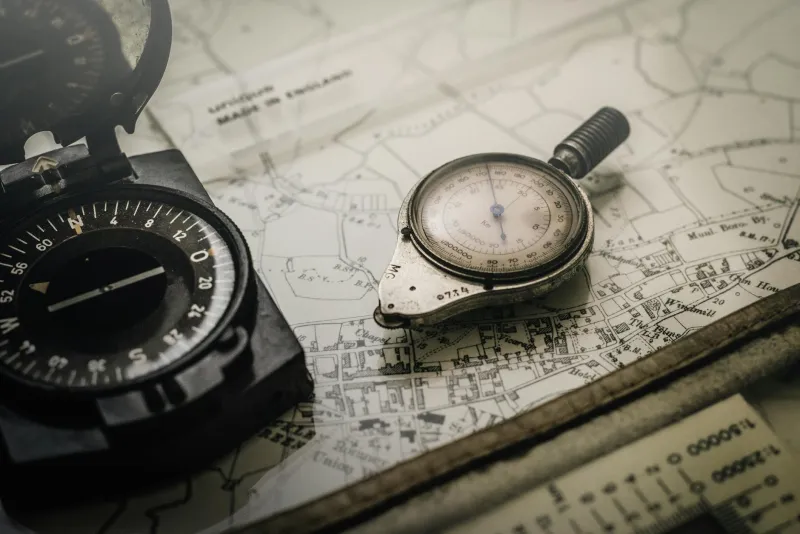
The Man Who Mapped America's Dreams
In 1902, when most Americans had never seen an automobile and the idea of driving across the country seemed as fantastical as flying to the moon, A.L. Westgard borrowed a friend's car and set out to do something that had never been attempted: create a reliable map of America's roads.
Twenty years later, his hand-drawn charts would become the foundation for the interstate highway system that transformed American life. But Westgard himself never owned a car, never held a government position, and never received credit for the network of roads that made the American road trip possible.
The Accidental Explorer
Anton Ludvig Westgard arrived in America from Norway in 1881 with a surveyor's training and a restless spirit that traditional mapmaking couldn't satisfy. While other cartographers worked from government surveys and railroad company reports, Westgard was fascinated by the spaces between the official routes—the wagon trails, Indian paths, and local roads that connected small towns but appeared on no official maps.
When automobiles began appearing on American streets in the early 1900s, Westgard saw an opportunity that nobody else recognized. Cars could go places trains couldn't reach, but only if someone figured out where the roads actually were and whether they could support motorized traffic.
"Most people saw cars as expensive toys for rich city folks," Westgard wrote in his journal. "I saw them as the key to connecting every corner of America. But first, someone had to figure out how to get from here to there."
The Great American Road Test
Westgard's solution was characteristically direct: he would drive every possible route himself, testing roads, measuring distances, and documenting conditions. Since he couldn't afford to buy a car, he convinced automobile manufacturers to loan him vehicles in exchange for detailed reports on how their cars performed under real-world conditions.
Between 1902 and 1922, Westgard drove more than 100,000 miles across America in borrowed cars, creating the first comprehensive maps of the nation's road network. His routes connected major cities through small towns that had been isolated since the frontier era, opening up vast regions of the country to automobile tourism and commerce.
Each expedition was an adventure in problem-solving. Westgard would set out with basic supplies, a camera, and surveying equipment, often driving roads that existed only as dirt tracks or following trails that hadn't been maintained since stagecoach days. He got stuck in mud, broke down in deserts, and navigated mountain passes that tested both his driving skills and his borrowed vehicles' capabilities.
"Every mile was a question mark," he later recalled. "Would the road hold up? Could you find fuel? Was there a bridge, or would you have to ford the river? I was writing the answers as I went."
More Than Just Maps
Westgard's maps were revolutionary not just for their accuracy, but for their practical detail. Unlike traditional cartographers who focused on geographic features, Westgard documented everything a motorist would need to know: road conditions, fuel availability, repair shops, hotels, and even scenic attractions worth stopping to see.
He created the first systematic rating system for American roads, using symbols to indicate whether routes were passable for automobiles, suitable only for experienced drivers, or too dangerous to attempt. His maps included detailed notes about seasonal conditions, local regulations, and cultural landmarks that would help travelers navigate not just the geography, but the social landscape of early 20th-century America.
"Westgard wasn't just mapping roads," explained transportation historian Dr. Margaret Foster. "He was mapping the possibility of American mobility. He was showing people that you could drive from New York to California, but also helping them understand what that journey would actually involve."
The Salesman for the Open Road
As Westgard's maps gained recognition, he became something unexpected: America's first advocate for a national highway system. He traveled the country giving lectures, writing articles, and lobbying state governments to improve their roads and standardize their signage.
His arguments were practical rather than poetic. Better roads would boost local economies by making tourism and commerce easier. Standardized routes would reduce travel times and improve safety. A connected highway system would strengthen national defense by allowing rapid movement of troops and supplies.
But Westgard understood that his real product wasn't maps or policy proposals—it was the dream of freedom that automobiles represented. His detailed route guides didn't just tell people how to get from one place to another; they proved that ordinary Americans could explore their own country in ways that had previously been impossible.
The Network Takes Shape
By 1920, Westgard's routes had become the unofficial template for American highway development. State transportation departments used his maps to plan road improvements. Tourism boards promoted his recommended routes to attract visitors. Automobile clubs distributed his guides to members planning long-distance trips.
The federal government began incorporating Westgard's work into official highway planning, though his name rarely appeared on government documents. When Congress passed the Federal Highway Act of 1921, authorizing the first coordinated national road system, many of the designated routes followed paths that Westgard had mapped and promoted for nearly two decades.
"He basically did the advance work for the entire American highway system," noted Dr. Foster. "By the time the government got serious about building roads, Westgard had already figured out where they should go."
The Forgotten Pioneer
Westgard continued his mapping work into the 1920s, but as automobiles became more common and roads more standardized, the need for his pioneering services diminished. Government agencies took over highway planning and mapping. Automobile manufacturers developed their own testing programs. The romantic era of individual exploration that Westgard had embodied gave way to bureaucratic efficiency.
He spent his later years working as a consultant for various transportation projects, but his name gradually disappeared from the story of American highway development. When President Eisenhower signed the Interstate Highway Act in 1956, creating the modern freeway system, few people remembered the Norwegian immigrant who had spent twenty years driving borrowed cars to prove that such a network was possible.
The Legacy of the Road
Westgard died in 1942, just as America was entering World War II and discovering how crucial his highway vision had become for national defense. The road network he had mapped and promoted proved essential for moving troops, supplies, and war materials across the continent. The routes he had pioneered became the backbone of America's wartime transportation system.
Today, millions of Americans take road trips along highways that trace paths Westgard first mapped in borrowed cars more than a century ago. The interstate system he helped envision carries 40% of American freight and connects communities that might otherwise remain isolated. The cultural phenomenon of the American road trip—the idea that you can point your car in any direction and find adventure—began with his hand-drawn maps and detailed travel guides.
The Mapmaker's True Discovery
Westgard's greatest achievement wasn't creating maps—it was proving that America could be connected. At a time when most people rarely traveled beyond their home counties, he demonstrated that the continent was smaller and more accessible than anyone had imagined. His borrowed cars became vehicles for a vision of American mobility that transformed how people thought about distance, community, and possibility.
His story reminds us that some of history's most important infrastructure was built not by governments or corporations, but by individuals who saw connections that others missed. Westgard never owned the car that made his work possible, but he owned something more valuable: the vision of an America where every road led somewhere, and every somewhere was within reach.
In an age of GPS and satellite mapping, when we can navigate anywhere with the touch of a screen, it's worth remembering the man who first proved that all these places were worth connecting—and who spent twenty years driving other people's cars to show us how.