The Beautiful Accidents That Built America
When Plans Fall Apart, Magic Begins
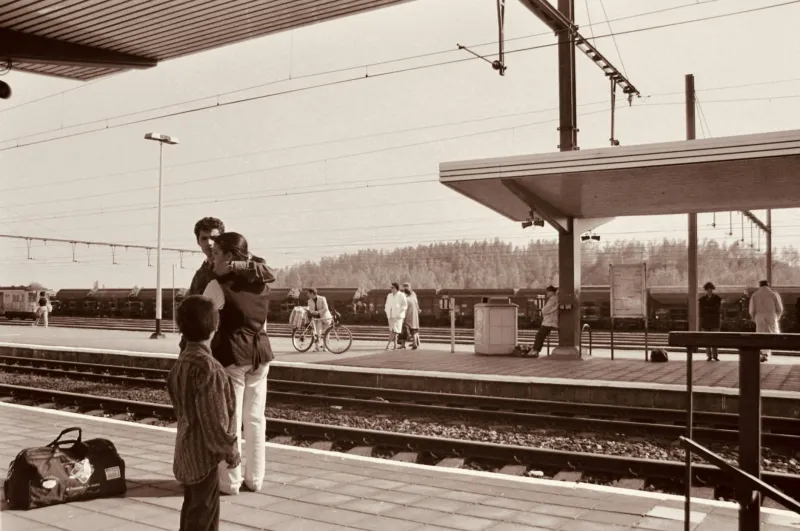
On a rainy Tuesday in 1952, twenty-three-year-old Dorothy Height was running late for what she thought would be the most important meeting of her young career. She'd been invited to speak at a civil rights conference in Chicago, her first major opportunity to address national leaders about youth activism.
But the train was delayed. Then delayed again. By the time Dorothy reached Union Station, she'd missed her connection by twenty-seven minutes.
Standing in the terminal, watching the taillights of her intended train disappear into the distance, Dorothy had a choice: wait six hours for the next scheduled departure, or take a different route that would get her to Chicago via Detroit. She chose Detroit.
That detour changed everything. On the Detroit train, she struck up a conversation with Mary McLeod Bethune, the legendary educator and civil rights leader who was traveling to the same conference. By the time they reached Chicago, Bethune had invited Dorothy to join the National Council of Negro Women's leadership team.
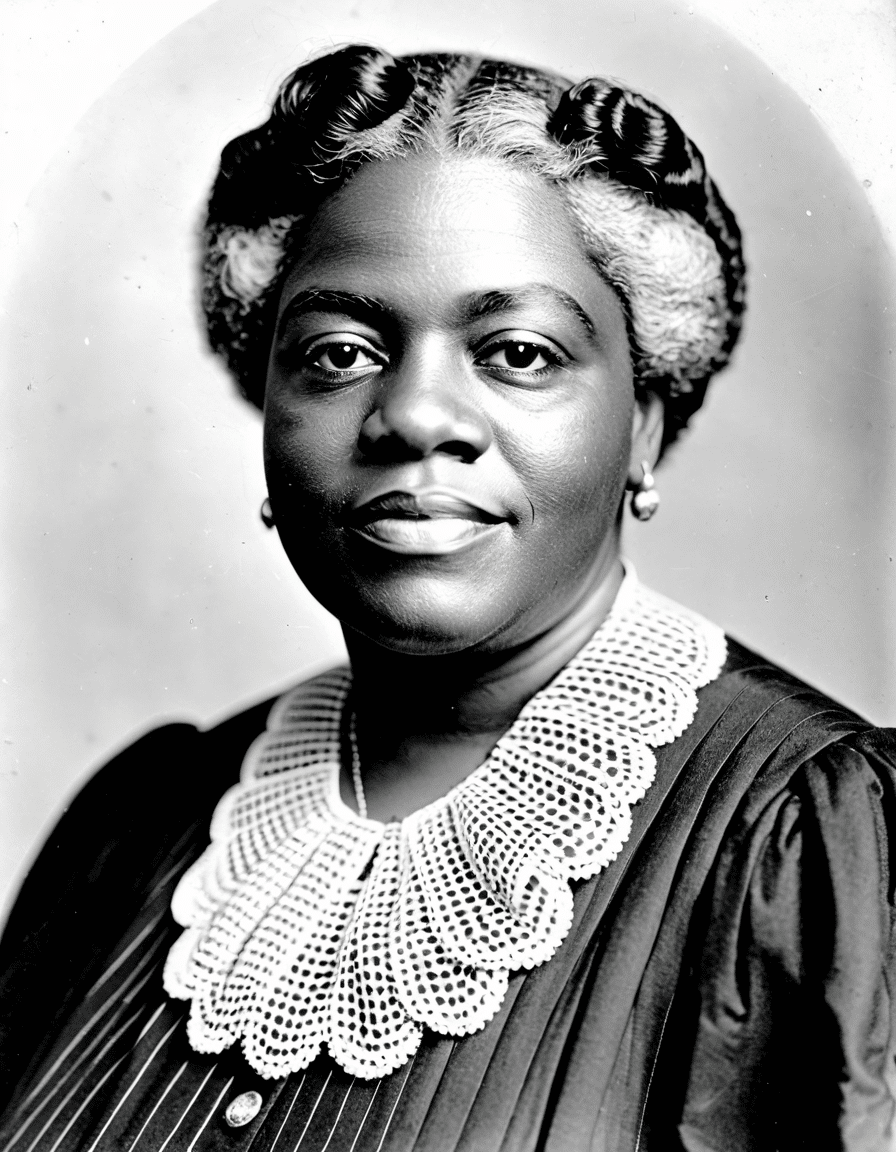 Photo: Mary McLeod Bethune, via www.baltimoreexaminer.com
Dorothy Height would go on to become the only woman among the "Big Six" leaders of the civil rights movement, working alongside Martin Luther King Jr. and organizing the March on Washington. All because she missed a train.
The Chemistry of Chance
Sometimes the universe has better plans than we do. Consider the case of Roy Plunkett, a young chemist at DuPont who was supposed to be developing new refrigerants in 1938. He'd prepared what should have been a routine experiment, pressurizing tetrafluoroethylene gas in a cylinder overnight.
The next morning, nothing came out when he opened the valve. The gas had mysteriously polymerized into a white, waxy solid that seemed impossible to dissolve, melt, or destroy. By all scientific logic, this was a failed experiment.
Roy could have discarded the substance and started over. Instead, he got curious. He spent weeks testing this accidental material, discovering that it was incredibly slippery, completely non-reactive, and resistant to both heat and cold.
He'd accidentally invented Teflon.
Within a decade, this "failed" refrigerant experiment was coating cooking pans, lining chemical equipment, and even protecting the heat shields on spacecraft. Roy's willingness to investigate what went wrong had created one of the most useful materials of the twentieth century.
The Wrong Door, The Right Life
Vera Rubin thought she was walking into a job interview for a secretary position at the Carnegie Institution in 1965. The astronomy department was notoriously unwelcoming to women, but Vera needed work, and typing seemed like a reasonable way to stay connected to the scientific world she loved.
She'd gotten the room number wrong.
Instead of the administrative offices, Vera accidentally walked into a meeting of the department's senior astronomers. Before anyone could redirect her, she found herself in the middle of a heated discussion about galaxy rotation curves—exactly the research she'd been pursuing independently for years.
When the department head asked if she had any thoughts on the problem, Vera couldn't help herself. She pulled out her own calculations and began explaining her theory about dark matter, the invisible substance that seemed to be holding galaxies together.
By the end of the meeting, she wasn't interviewing for a secretary position anymore. She was being offered a research fellowship that would lead to her becoming one of the most important astronomers of her generation.
The Conversation That Changed Everything
In 1943, Katherine Johnson was riding the bus home from her job as a "computer"—one of the African American women who performed complex mathematical calculations for NASA's predecessor agency. She was exhausted, looking forward to nothing more than dinner and sleep.
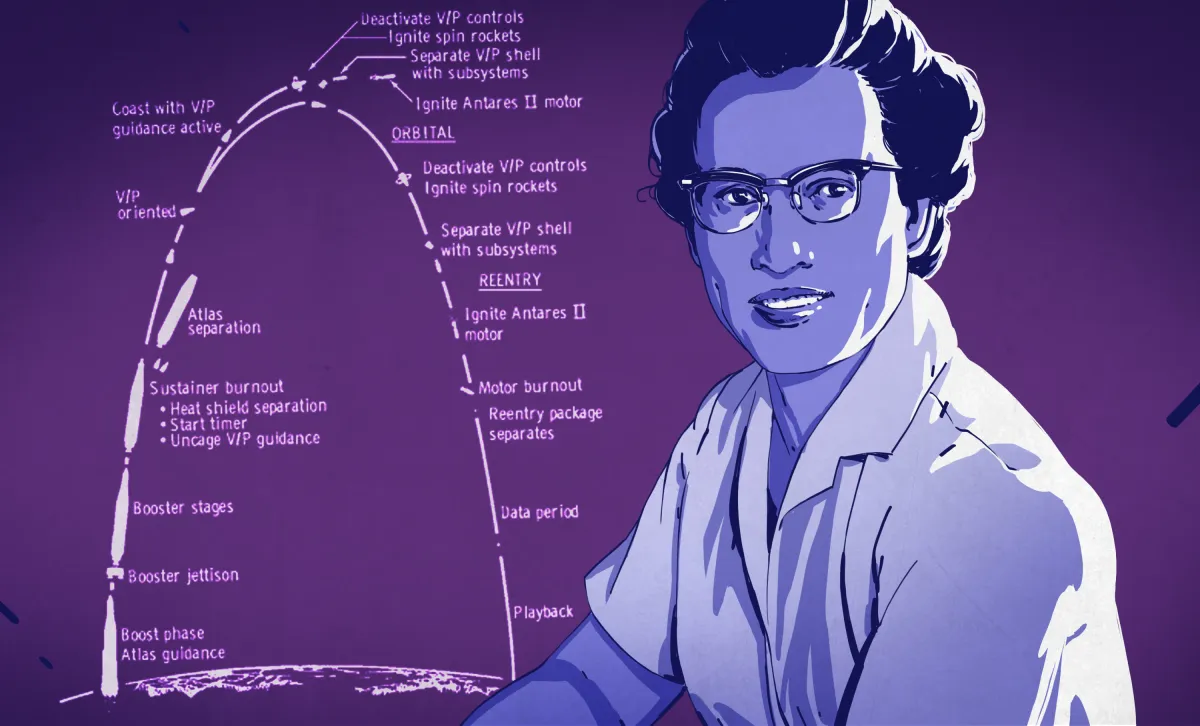 Photo: Katherine Johnson, via hackaday.com
An elderly white man sitting across from her was struggling with a crossword puzzle. "Seven letters," he muttered. "'Mathematical sequence.' Starts with F."
"Fibonacci," Katherine said quietly, almost without thinking.
The man looked up, surprised. They began talking about mathematics, and Katherine discovered she was speaking with a senior engineer from the Space Task Group. By the time the bus reached her stop, he'd asked if she might be interested in working on trajectory calculations for the upcoming Mercury missions.
That casual conversation led to Katherine becoming the mathematician who calculated the flight path for John Glenn's historic orbit around Earth. Glenn himself insisted that Katherine personally verify the computer calculations before he would agree to launch.
The Philosophy of Beautiful Accidents
These stories share something beyond their happy endings. They reveal a fundamental truth about how extraordinary lives actually unfold: the most important moments often arrive disguised as inconveniences, mistakes, or random encounters.
But accidents alone don't create success. Each of these individuals possessed something crucial: the openness to recognize opportunity even when it didn't look like what they'd been expecting. Dorothy Height could have spent her six-hour delay complaining about the train schedule. Roy Plunkett could have thrown away his "ruined" experiment. Vera Rubin could have apologized and left when she realized she was in the wrong room.
Instead, they leaned into the unexpected.
The Art of Productive Confusion
Psychologists have a term for this quality: "tolerance for ambiguity." It's the ability to remain curious and engaged when things don't go according to plan. Research suggests that people with high tolerance for ambiguity are more likely to make creative breakthroughs and achieve unexpected success.
They're also more likely to recognize opportunity when it arrives wearing the wrong clothes.
Consider the number of major discoveries that began as "contaminated" experiments, successful businesses that started as pivots from failed original ideas, or life-changing relationships that began with mistaken identity. The pattern is so common that it suggests something profound about the nature of progress itself.
Maybe the best outcomes aren't the ones we plan for. Maybe they're the ones we're brave enough to pursue when our plans fall apart.
The Invitation in Every Interruption
The next time your train is delayed, your experiment fails, or you walk into the wrong room, pause before you curse your luck. Ask yourself: what if this isn't a mistake? What if this is an invitation to a life more interesting than the one you'd originally planned?
The beautiful accidents that built America weren't really accidents at all. They were moments when extraordinary people chose curiosity over frustration, possibility over disappointment, and adventure over the safety of sticking to the script.
Sometimes the wrong train is exactly the right train. You just don't know it yet.