Clocking In, Clocking Out, Changing the World: The Secret Inventors of the American Workforce
Clocking In, Clocking Out, Changing the World: The Secret Inventors of the American Workforce
There's a version of the inventor story we've all been sold. The gleaming laboratory. The ivy-covered university. The well-funded genius in a crisp white coat, surrounded by beakers and blackboards, with nothing but time and money and brilliant colleagues. It's a good story. It's just not the one that happened most often.
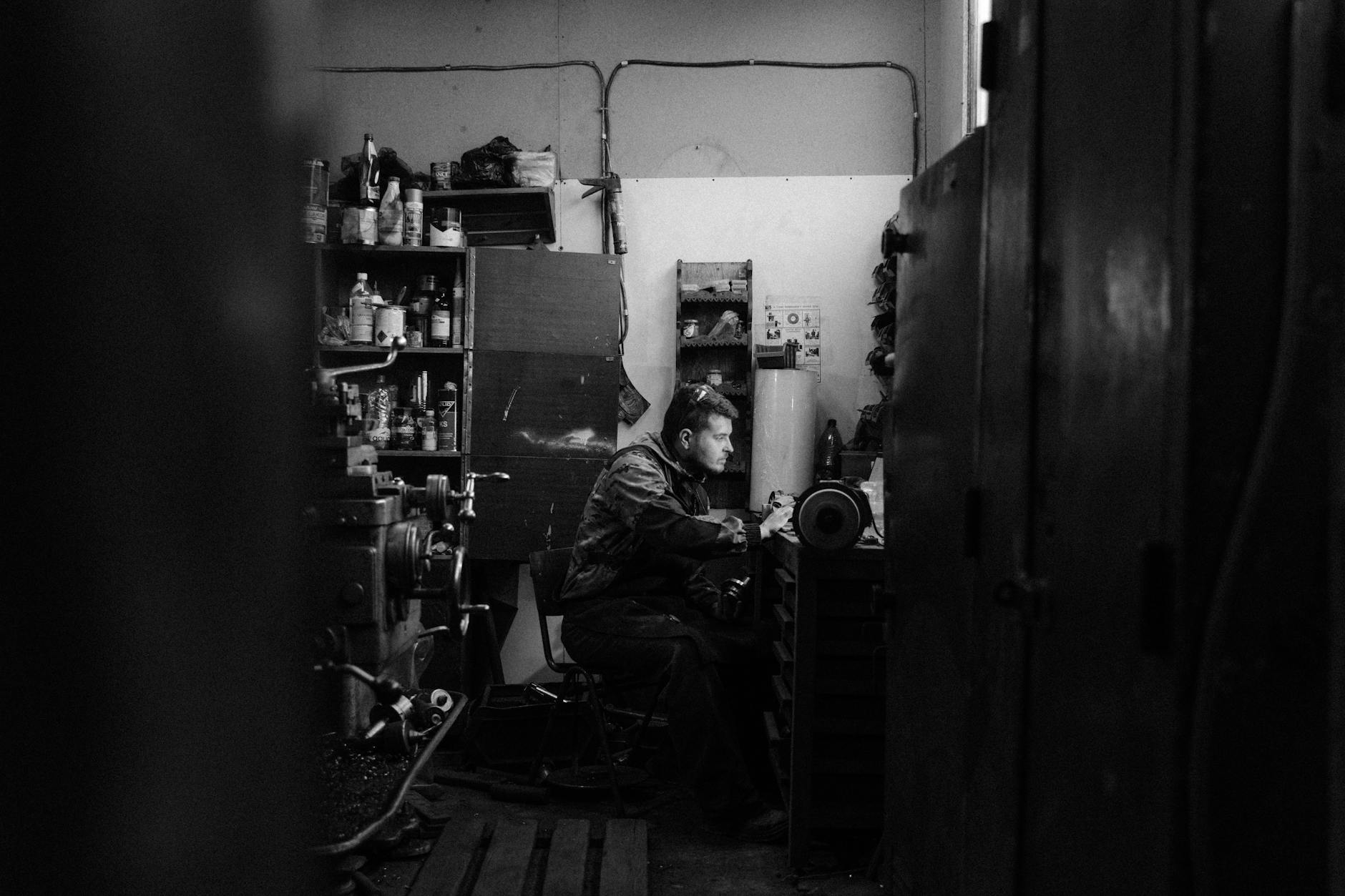
The real story of American invention looks a lot more like a double shift. It looks like a man scribbling diagrams on a paper bag during his lunch break. It looks like a woman running calculations in her head while she rings up groceries. It looks like someone too exhausted to quit.
These are a few of those people.
The Janitor Who Filed a Patent Before His Boss Knew His Name
Albert J. Parkhouse worked at the Timberlake Wire and Novelty Company in Jackson, Michigan, in 1903. His job was about as unglamorous as it sounds — he was a factory worker on the floor, handling wire. One morning he arrived at work to find all the coat hooks taken. Annoyed and apparently unwilling to leave it at that, he grabbed a piece of wire, bent it into a figure-eight loop, twisted the ends into a hook, and hung up his coat.
He had just invented the wire clothes hanger.
Parkhouse filed a patent. His company, seeing the commercial potential, promptly claimed the rights. Parkhouse made almost nothing from it. But the design he improvised out of workplace frustration became one of the most reproduced objects in American history. Billions of them hang in closets across the country right now. None of them have his name on them.
His story is a reminder that necessity doesn't just mother invention — sometimes it mothers it on a factory floor, on a Tuesday morning, because someone had nowhere to put their coat.
The Mail Carrier With a Better Idea
For most of the 19th century, mail delivery in the United States was a chaotic, expensive, and frankly exhausting process. People had to travel — sometimes miles — to pick up their own letters from a central post office. Nobody thought much about changing it. It was just how things worked.
Then Joseph Briggs, a mail carrier in Cleveland, Ohio, decided it didn't have to be.
Briggs had been walking his route long enough to notice patterns — who lived far from the post office, who struggled to get there, how much time and effort was being wasted on both ends. He proposed a system of direct home delivery. His supervisors resisted. The idea seemed impractical, maybe even expensive. Briggs pushed anyway, eventually convincing Cleveland's postmaster to run a small trial in 1863.
It worked. The idea spread. Within a few years, free city mail delivery was being adopted across the country, and by the late 1800s it had become a cornerstone of American daily life.
Briggs wasn't a postal administrator or a government planner. He was the guy walking the route. That's exactly why he saw what needed fixing.
The Grocery Clerk Who Changed How America Eats
Clarence Birdseye gets the famous name, but the frozen food revolution didn't start in a laboratory. It started in Labrador, Canada, where Birdseye was working as a fur trader in the early 1910s — about as far from a research institution as you can get.
He noticed something. When local Inuit fishermen pulled fish from the water in extreme cold, the fish froze almost instantly. And when those fish were thawed and eaten later, they tasted fresh. Not preserved-fresh. Actually fresh.
Birdseye had no food science background. He had curiosity and a fur trader's practical eye. He spent years experimenting — in his kitchen, in rented ice plants, wherever he could find the space — before developing a flash-freezing process that would eventually transform the American grocery store.
He sold his patents and company to what became General Foods for $22 million in 1929. But the origin of it all wasn't a eureka moment in a lab. It was a working man standing on a frozen riverbank, watching fishermen do something they'd always done, and asking why.
The Night-Shift Worker Who Patented the Future
Jan Ernst Matzeliger immigrated to Lynn, Massachusetts, from Dutch Guiana in 1877 and found work in a shoe factory — specifically as a lasting machine operator, one of the most physically demanding jobs in the plant. He spoke limited English. He had no formal engineering training. He lived in a city that was largely hostile to him.
And yet, working nights and weekends in a tiny rented room, he spent years designing a machine that could do what no machine had ever done before: attach the upper part of a shoe to its sole automatically, mimicking the hand movements of a skilled cobbler.
At the time, shoe lasting was the one step in manufacturing that required human hands. It was a bottleneck that kept shoe prices high and production slow. Matzeliger's machine could last 700 pairs of shoes in a single day. Skilled human lasters could manage around 50.
He patented it in 1883. The shoe industry was never the same. Shoe prices dropped by nearly half. His invention made Lynn one of the most productive shoe-manufacturing cities in the world.
Matzeliger died at 37, before he could see the full impact of what he'd built. He'd spent his inventing years living in poverty, working factory shifts to survive, drawing diagrams by lamplight. The patent he filed from that rented room is still considered one of the most significant mechanical innovations of the 19th century.
What the Day Job Actually Did
It's tempting to frame these stories as triumphs despite circumstance. But there's a better way to read them.
Parkhouse invented the hanger because he was on the factory floor. Briggs redesigned mail delivery because he was walking the route every day. Birdseye cracked food preservation because he was working a trade job in a frozen wilderness. Matzeliger built his machine because he was operating one, watching its limitations up close, every single shift.
The day job wasn't the obstacle. In most of these cases, it was the laboratory.
What these inventors shared wasn't access or privilege or credentials. They had proximity — to problems, to materials, to the daily friction of the world as it actually worked. And they had the particular stubbornness of people who couldn't afford to wait for someone else to fix things.
America's patent history is full of names that never made it into textbooks. People who invented on lunch breaks and kitchen tables and factory floors. People whose employers took the credit, or whose timing was off, or who simply didn't have the resources to turn an idea into a fortune.
But the ideas were real. The ingenuity was real. And the next time you hang up your coat, it's worth remembering: the person who made that possible was just trying to find somewhere to put his jacket on a Tuesday morning in Michigan.