The Sound of Everything: How a College Dropout Taught America to Hear

The Restless Mind That Couldn't Sit Still
Ray Dolby should have been the perfect Stanford engineering student. Bright, technically minded, already tinkering with electronics since childhood — he had all the makings of a conventional success story. But conventional wasn't in Dolby's vocabulary. In 1957, he made a decision that would have horrified his professors: he dropped out of college to chase an obsession that most people couldn't even hear.
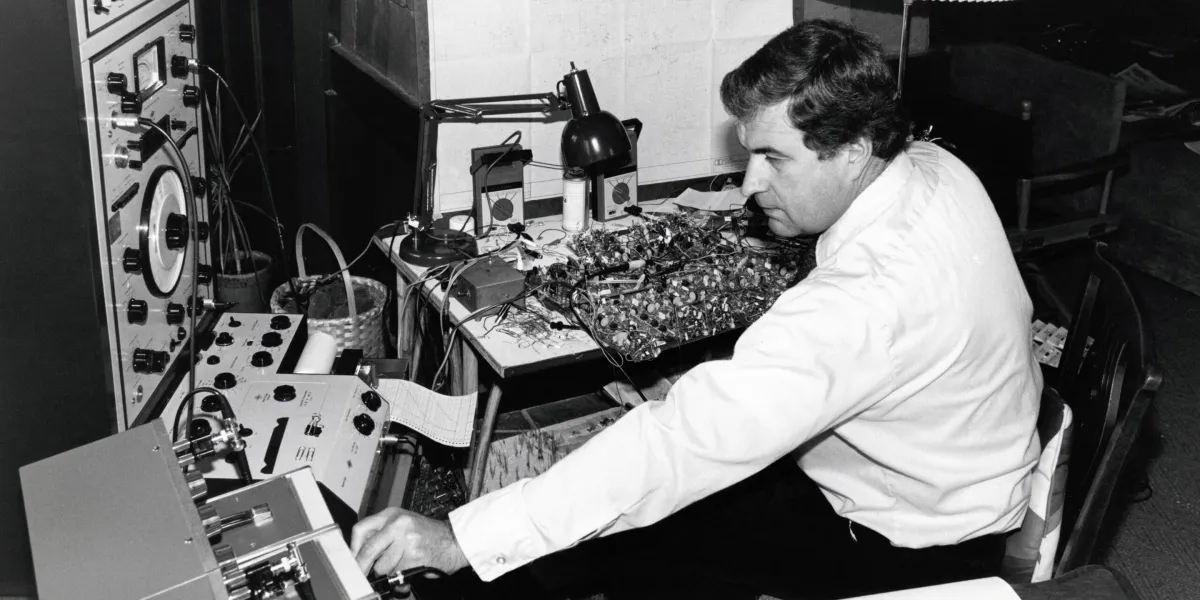 Photo: Ray Dolby, via www.dolby.com
While his classmates buried themselves in textbooks, Dolby was captivating by something far more elusive — the hiss, the crackle, the unwanted noise that lived in the margins of every recording. To most people, background noise was just an annoying fact of life. To Dolby, it was a puzzle that demanded solving.
When Dropping Out Was the Smart Move
Dolby's timing couldn't have been more perfect, though nobody realized it at the time. The late 1950s were the dawn of the hi-fi era, when Americans were falling in love with recorded music like never before. But every record, every tape, every broadcast carried with it an unwanted passenger: noise. The technology of the day simply couldn't separate the music from the static.
Instead of finishing his degree, Dolby took a job at Ampex, a company that was pushing the boundaries of magnetic tape recording. While his former classmates learned theory in lecture halls, Dolby was getting his hands dirty with the actual machinery that captured sound. He wasn't just studying electronics — he was living inside them, understanding their quirks and limitations in ways that textbooks could never teach.
This hands-on education proved invaluable. Dolby discovered that the engineers around him, brilliant as they were, had developed a kind of professional blindness. They'd grown so accustomed to working around noise that they'd stopped really hearing it. Dolby, approaching the problem with fresh ears and an outsider's perspective, could hear what they'd learned to ignore.
The Breakthrough That Almost Didn't Happen
In 1965, Dolby made a decision that seemed even more reckless than dropping out of college: he moved to London and started his own company with virtually no money and no connections in the British audio industry. His plan was to develop a noise reduction system that could eliminate the hiss from recordings without destroying the music itself.
The technical challenge was immense. Previous attempts at noise reduction had worked like a sledgehammer — they got rid of the noise, but they also flattened the subtle details that made music come alive. Dolby needed something more surgical, a technology that could distinguish between wanted and unwanted sound in real time.
Working essentially alone in a small London laboratory, Dolby developed what would become known as Dolby A noise reduction. The system was elegant in its complexity — it analyzed incoming audio, identified the frequencies where noise typically lived, and then selectively reduced only those frequencies during quiet passages, restoring them during louder moments when the music would naturally mask any noise.
The Quiet Revolution
What happened next was a masterclass in how transformative technology often spreads — not through flashy marketing campaigns, but through word of mouth among professionals who recognized something genuinely revolutionary when they heard it.
The first major recording studio to adopt Dolby's system was Decca Records in London. When other engineers heard the difference — the crystal-clear silence between notes, the way instruments seemed to emerge from a black background instead of fighting through a fog of hiss — they had to have it for their own studios.
By the early 1970s, Dolby noise reduction had become the invisible standard of the recording industry. Almost every album recorded in a major studio passed through Dolby's technology, though most listeners never knew it. The system was so effective that its greatest achievement was its own invisibility — people didn't notice the absence of noise, they just noticed that music sounded better.
Beyond the Studio
Dolby's real genius wasn't just in solving the noise problem — it was in recognizing that the same technology could transform how people experienced sound in their homes. As cassette tapes became the dominant format for portable music in the 1970s and 1980s, Dolby noise reduction became essential for making them listenable.
The familiar "Dolby" logo became as ubiquitous as any brand name in America, appearing on everything from car stereos to boom boxes to high-end hi-fi equipment. But unlike most consumer brands, Dolby represented something invisible — not what you heard, but what you didn't hear.
When compact discs arrived in the 1980s, promising perfect digital sound, many predicted the end of Dolby's relevance. Instead, Dolby evolved, developing surround sound systems for movie theaters and eventually for home entertainment. The company that started with one dropout's obsession with tape hiss became the foundation of modern cinema sound.
The Outsider Advantage
Looking back, it's clear that Dolby's unconventional path wasn't a detour from success — it was the only route that could have led him there. His willingness to abandon formal education gave him something more valuable than a degree: the ability to hear problems that trained engineers had learned to accept.
The audio industry of the 1960s was dominated by people who understood electronics but had made peace with the limitations of their medium. Dolby, approaching the field with fresh ears and an outsider's refusal to accept "good enough," could envision possibilities that insiders couldn't see.
Today, as streaming services and digital audio continue to evolve, Dolby's influence remains foundational. The company he started in a small London lab now employs thousands of engineers and continues to push the boundaries of how we experience sound. But it all traces back to one college dropout who trusted his ears more than his textbooks and refused to accept that background noise was just a fact of life.
The next time you watch a movie, listen to music, or make a phone call, you're experiencing the world through technology that exists because someone was willing to walk away from the conventional path and chase an obsession that most people couldn't even hear.