The President Nobody Wanted to Remember — Who Became the Leader Everyone Needed
On January 20, 1981, Jimmy Carter stepped off Air Force One for the last time as president, carrying the weight of Iranian hostages, gas lines, and a country that had essentially fired him after one term. The peanut farmer from Plains, Georgia — population 600 — had become the face of American decline, a well-meaning man who seemed overwhelmed by the job he'd campaigned so hard to win.
Most ex-presidents fade into comfortable obscurity, writing memoirs and collecting speaking fees. Carter had other plans.
The Hammer and the Ballot Box
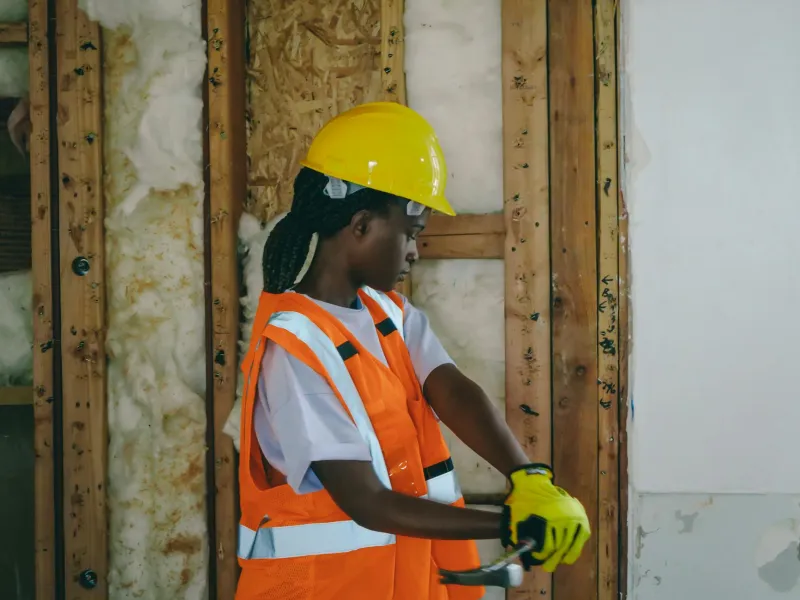
While Ronald Reagan was reshaping America's political landscape, Carter was literally reshaping lives with his hands. In 1984, he picked up a hammer for Habitat for Humanity, and what started as a photo opportunity became a 35-year commitment. The former leader of the free world spent his weekends framing houses, installing drywall, and teaching volunteers how to swing a hammer properly.
But Carter wasn't just building homes — he was rebuilding his own legacy, one nail at a time.
The image of a 90-year-old former president working construction sites became iconic, but it was just the visible tip of something much larger. Through the Carter Center, founded in 1982, he was quietly revolutionizing what it meant to be an ex-president. While other former leaders gave speeches, Carter was monitoring elections in countries most Americans couldn't find on a map.
Democracy's Traveling Salesman
In places where democracy was fragile or nonexistent, Carter became America's most unlikely ambassador. He observed elections in Panama, Nicaragua, Ghana, and dozens of other nations, lending credibility to democratic processes that desperately needed it. His presence alone often prevented violence and fraud.
The man who had struggled to manage Congress was now mediating between warring factions in Ethiopia and North Korea. The president who couldn't solve the Iran hostage crisis was successfully negotiating ceasefires and peace agreements across the globe.
By the 1990s, something remarkable had happened: Jimmy Carter had become more influential out of office than he'd ever been in it.
The Disease That Met Its Match
But perhaps Carter's most extraordinary achievement was taking on an enemy that had terrorized humanity for centuries: Guinea worm disease. When the Carter Center began its eradication campaign in 1986, 3.5 million people in 20 countries suffered from this parasitic infection. The disease was ancient, mentioned in Egyptian medical texts and possibly referenced in the Bible.
Carter didn't just write checks — he traveled to remote villages in Sudan and Ghana, wading through contaminated water to understand the problem firsthand. He sat with victims whose legs were pierced by emerging worms, learning how poverty and lack of clean water created the perfect breeding ground for suffering.
The eradication campaign required changing centuries-old behaviors in some of the world's most isolated communities. Carter and his team had to convince people to filter their drinking water, report cases to health workers, and isolate infected individuals — all without the infrastructure that Americans take for granted.
The Numbers That Tell a Story
By 2023, Guinea worm disease existed in only four countries, with just 13 confirmed cases worldwide. Carter had overseen a 99.9% reduction in human suffering — a achievement that rivals the eradication of smallpox. The man dismissed as ineffective had proven more effective at eliminating disease than most medical institutions.
The statistics are staggering: Carter has helped monitor over 100 elections, mediated conflicts that saved thousands of lives, and brought the world to the brink of eradicating only the second human disease in history.
The Unlikely Teacher
What makes Carter's post-presidential career so remarkable isn't just what he accomplished, but how he redefined success itself. In a culture obsessed with wealth and fame, Carter chose service. In a political system that rewards partisanship, he chose humanity.
He taught America that leadership doesn't end when you leave office — it evolves. That failure in one arena doesn't preclude greatness in another. That sometimes the most important work happens far from cameras and headlines, in places where the only measure of success is human dignity restored.
Today, at 99 years old, Carter remains in hospice care in the same modest ranch house he built in 1961. He never got rich, never sought revenge against political enemies, never wrote tell-all books or cashed in on his celebrity.
Instead, he became something rarer than a successful president: a genuinely great human being.
The Vault's Lesson
Jimmy Carter's story reminds us that our greatest chapters might be written after everyone thinks the story is over. The peanut farmer who couldn't win a second term became the ex-president who couldn't be stopped from changing the world.
Sometimes the most unlikely vault of all is the one that holds our second chances.